Welcome to DailyAdda News (“we”, “our”, “us”). By downloading, accessing, or using the DailyAdda News mobile app or website, you agree to the following Terms & Conditions. Please read them carefully.
🔹 1. Use of the App
DailyAdda News provides:
Bengali, Hindi & English news
RSS-based headlines
Short summaries
External links to publishers
Local updates, alerts & information
You agree:
To use the app legally
Not to misuse or interfere with its services
Not to copy, distribute or republish our summary content without permission
🔹 2. Content Sources & Copyright
DailyAdda News shows:
Headlines
Short rewritten summaries
Source credit
Link to original article
We do not claim ownership of original articles from external publishers.
You must access full articles on the publisher’s website. External content belongs to respective copyright holders.
🔹 3. User Conduct
You agree not to:
Harm or disrupt the app
Attempt unauthorized access
Upload harmful material
Scrape data or automate requests
Use the app for political manipulation or spreading misinformation
🔹 4. Third-Party Services
DailyAdda News uses:
External RSS feeds
Third-party news websites
Google AdMob
Analytics services
We are not responsible for:
Accuracy of external content
Availability of third-party websites
Their privacy policies or terms
🔹 5. Notifications
DailyAdda News may send:
Breaking news alerts
Job alerts
Local city updates
Weather warnings
You may disable notifications anytime in device settings.
🔹 6. No Guarantee of Accuracy
News is subject to change. We try to provide accurate updates but:
We do not guarantee 100% accuracy
We are not responsible for errors or delays
Users should verify important news directly from official sources
🔹 7. Advertisements
DailyAdda displays ads through:
Google AdMob
Other ad partners
We are not responsible for:
Content of ads
Actions taken on third-party ad pages
🔹 8. Limitation of Liability
DailyAdda News is not liable for:
Data loss
App downtime
Incorrect or outdated news
Third-party website actions
Financial, personal, or business loss caused by news content
Use the app at your own risk.
🔹 9. Changes to the Service
We may modify:
Features
Categories
App layout
Terms & Conditions
We can also suspend or discontinue parts of the service.
We use cookies to ensure you get the best experience on our website. By continuing to use our site, you accept our use of cookies,
Privacy Policy,
and
Terms of Service.
Hair loss is no longer something people associate only with ageing. Across India, a growing number of young adults in their 20s are seeking professional advice and treatment for hair thinning far earlier than previous generations. What was once dismissed as a phase or something to “deal with later” is now being approached with urgency, awareness, and intent. This shift reflects changing lifestyles, increased exposure to stress, and better access to medical information and advanced treatments.
Experts say early intervention is not about panic, it’s about prevention, preservation, and long-term planning. With clinics reporting a noticeable rise in younger patients, the conversation around hair loss is evolving from reactive to proactive, reshaping how a new generation thinks about hair health.
According to Dr. Gaurang Krishna, co-founder and Director of MedLinks, hair loss patterns have changed significantly over the past decade.
"Hair loss is no longer a concern limited to middle age. Across India, clinics are seeing a steady rise in young adults seeking professional hair loss consultation much earlier than before."
Dermatologists and hair specialists point to increased awareness and access to credible information as major drivers behind this shift. Young adults today are more informed about genetics, hormonal health, and lifestyle-related triggers. They are also more open to seeking medical advice early rather than relying on home remedies or waiting for visible baldness to appear.
From 'Wait And Watch' To Early Action
The mindset around hair loss has undergone a fundamental change.
"Increased awareness, changing lifestyles, and access to advanced treatment options have shifted the mindset from “wait and watch” to early intervention," says Dr. Krishna.
He adds that early diagnosis allows specialists to slow progression and protect existing hair rather than attempting restoration after significant loss.
This approach focuses on preserving density, improving scalp health, and planning treatments that offer more natural long-term outcomes.
Why Young Adults Are Consulting Clinics In Their 20s
(Image Source: ABPLIVE AI)
Ten years ago, hair transplants were often considered a last resort. That perception has changed.
"Young adults today understand the science behind hair loss. Early consultation helps assess genetic risk, slow progression, and preserve existing hair density, allowing better long-term planning and more natural outcomes," Dr. Krishna explains.
Medical experts stress that early visits do not automatically mean surgery. In many cases, lifestyle changes, medical therapies, and nutritional correction can significantly slow hair loss without invasive procedures.
"The most common myth is that hair transplants are only for those who are completely bald. In reality, many young patients can stabilise early-stage hair loss through medical management without surgery," Dr. Krishna clarifies.
This myth often delays treatment, allowing hair loss to progress further than necessary. Experts emphasise that early-stage hair thinning responds better to non-surgical options.
Lifestyle Changes Are Playing A Major Role
(Image Source: ABPLIVE AI)
Ms. Lalita Arya, CEO of DermaPuritys, highlights that lifestyle choices are accelerating hair loss among young adults.
While genetics do play a role, a large chunk of early hair loss today is lifestyle-driven."
By saying, "Chronic stress, poor sleep, crash diets, nutrient deficiencies, hormonal imbalances, and long screen hours quietly disrupt the hair growth cycle. The result? Hair that sheds faster than it can grow back," she explains how daily habits silently disrupt the hair growth cycle.
Dr. Krishna echoes this concern, noting that modern routines are placing unprecedented stress on hair follicles.
"Chronic stress, poor sleep, nutritional deficiencies, smoking, excessive screen time, and aggressive styling habits weaken hair follicles and speed up genetic hair loss."
Styling Habits And Everyday Damage
Many young adults underestimate the impact of styling. Ms. Arya warns, "Styling habits matter more than we think."
She points out that repeated heat exposure and chemical treatments gradually weaken hair.
"Daily heat styling, frequent colouring, tight hairstyles, chemical treatments & even aggressive brushing weaken hair shafts over time."
While these habits may not cause baldness directly, they accelerate thinning and breakage, especially when combined with stress or poor nutrition.
Early Signs That Often Go Ignored
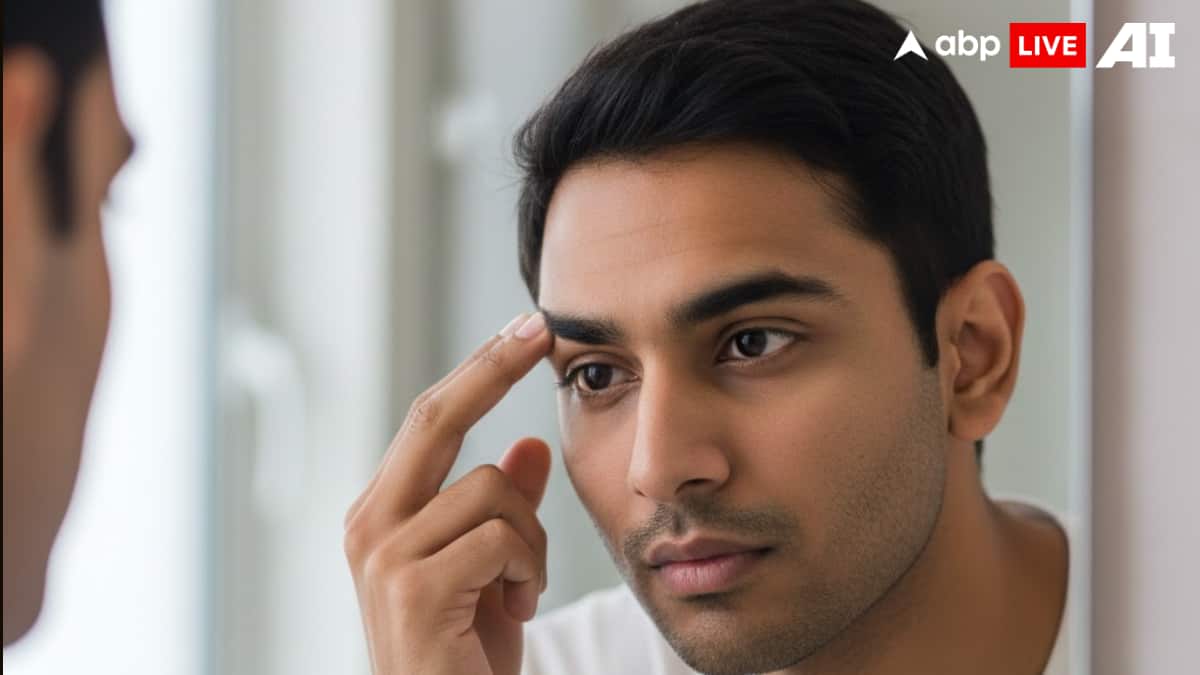
(Image Source: ABPLIVE AI)
One of the biggest challenges is recognising early warning signs.
"Temple recession, reduced density, and finer hair texture are early warning signs frequently overlooked," says Dr. Krishna.
Ms. Arya adds that not all hair fall is abnormal, but patterns matter.
"Shedding vs real hair loss is also a factor. Seeing hair in the shower is normal."
However, she advises caution when symptoms persist.
"Red flags appear when Hair fall continues for months, The ponytail feels thinner, The scalp becomes more visible, Hair doesn’t grow back at the same rate."
Ms. Arya offers practical advice that specialists widely agree on:
"A simple hair survival guide for your 20s includes, potect the roots. Simply manage stress, sleep well, eat enough protein and iron. Make sure to be gentle. Limit heat, chemicals, and tight styles. For you hair to remain healthy, it's important to act early. Don’t ignore persistent hair fall, early care prevents long-term damage."
Experts stress that treating hair loss early is not an overreaction.
"Hair loss is no longer something people wait to “deal with later.” For many in their 20s, it’s becoming an early wake-up call, and for good reason," Ms. Arya explains.
She sums it up clearly, by saying, "Treating hair loss early isn’t panic. It’s prevention."
[Disclaimer: The information provided in the article is shared by experts and is intended for general informational purposes only. It is not a substitute for professional medical advice, diagnosis, or treatment. Always seek the advice of your physician or other qualified healthcare provider with any questions you may have regarding a medical condition.]