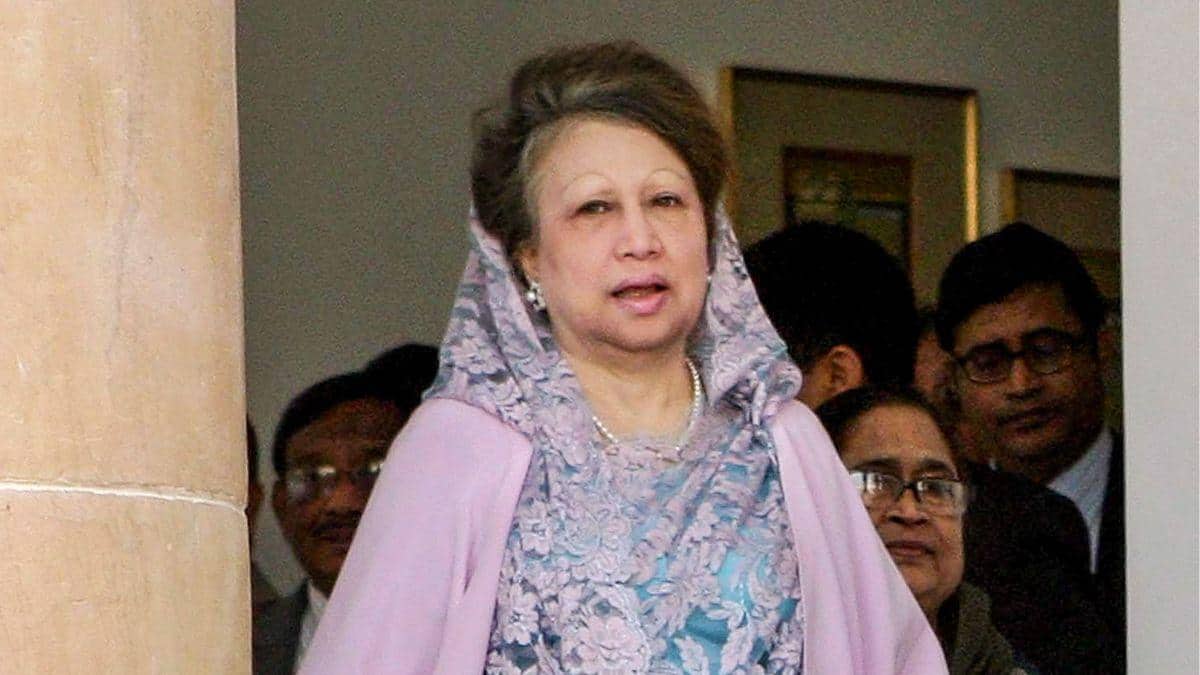
Khaleda Zia, the first female Prime Minister of Bangladesh and long-time chairperson of the Bangladesh Nationalist Party (BNP), passed away at the age of 80 on December 30, 2025. During her time in office, her relationship with India transitioned from one characterised by intense nationalist friction to a more pragmatic, albeit cautious, engagement in her later years. Her tenure as Prime Minister, which spanned three terms, will continue to influence the future of Bangladesh. Her son, Tarique Rahman, will not only succeed her as the party leader but is also being considered a potential next Prime Minister of that country.
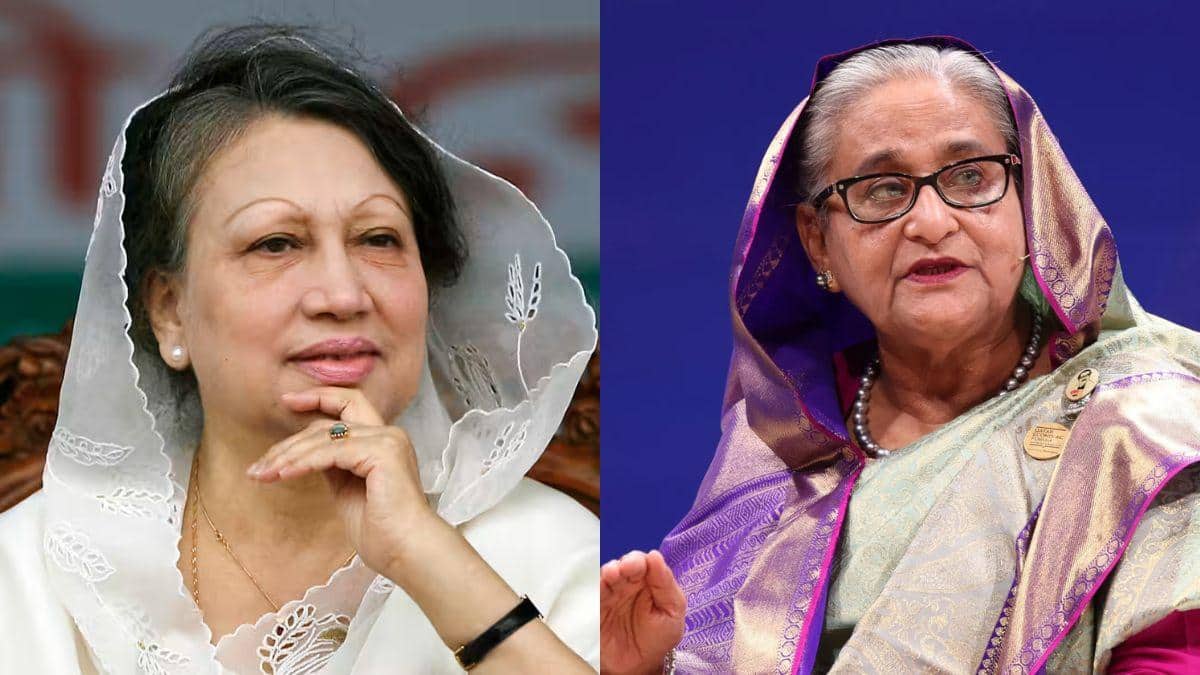
Khaleda, the wife of former military officer Zia-ur-Rahman, who served as the President of Bangladesh, was imprisoned amid serious allegations of corruption in 2018 by former Prime Minister Sheikh Hasina of Awami League. Since becoming the Prime Minister of Bangladesh for the first time in 1991, Khaleda has had a prominent political career that saw her becoming the PM twice more from February 1996 till March 1996 and again from 2001-2006.
Khaleda became the Prime Minister of Bangladesh for the first time in 1991 following the fall of military ruler Hussain Muhammad Ershad of Jatiya Party (JP). Under Khaleda, BNP won the 1991 elections with a resounding victory and she became the first woman Prime Minister of Bangladesh. She was soon credited to be a “torchbearer of democracy” as she strategically transitioned Bangladesh from a presidential to a parliamentary government in an effort to usher in democracy in that country. She eventually brought in parliamentary democracy through the 12th constitutional amendment thereby ushering in an era of representative democracy.
Later that year, Khaleda addressed the United Nations General Assembly (UNGA) that marked her grand entry in the world stage even as her speech was highly appreciated by the international community. During her address there she spoke about restoring democracy, economic development (education, investment), social stability, and Bangladesh's commitment to global peace within the UN framework after years of military rule, advocating for UN reform and multilateralism.
While reintroduction of the parliamentary democracy system is regarded as one of the high points of her rule, Khaleda is also credited for holding elections regularly and enshrining the caretaker government (CTG) system in their Constitution by passing 13th amendment.
Despite her accomplishments, her first time in office was marred by continuous conflicts with the Awami League (AL). Additionally, the rise of Islamist fundamentalism created a significant security threat, not only to Bangladesh but also to its neighbouring country, India. This volatile environment intensified tensions and raised concerns about stability in the region, highlighting the complex challenges she faced during her leadership.
Khaleda Zia and Relations With India
Zia positioned the BNP as the "protector" of Bangladeshi sovereignty against what she termed "Indian domination." She consistently criticized her political rival, Sheikh Hasina, accusing her of "selling out" the country to India. One of her most notable remarks described the toll-free passage of Indian trucks on Bangladeshi roads as akin to "slavery," reflecting her strong stance on national sovereignty.
During her tenures in office from 1991 to 1996 and again from 2001 to 2006, Zia’s government faced significant mistrust from the Indian government. Indian officials often alleged that her administration provided a sanctuary for insurgents from northeast India, including groups such as the United Liberation Front of Assam (ULFA). Furthermore, they accused her of collaborating with Pakistan's Inter-Services Intelligence (ISI), which heightened tensions between the two nations.
Zia’s first visit to India happened in May 1992 to attend the eighth SAARC Summit. This period was marked by significant regional events, including the signing of the ‘Teen Bigha Corridor’ lease, which allowed Bangladesh perpetual access to its Dahagram-Angarpota enclave.
It was June 1992 when India agreed to lease the ‘Teen Bigha Corridor’ for 999 years. This was facilitated under the 1974 Land Boundary Agreement.
However, relations between Delhi and Dhaka remained sour as Zia's administration consistently opposed proposals to grant India transit or trans-shipment rights through Bangladesh to its northeastern states. She argued that such agreements would compromise the country’s national security and interests.
She became the first Prime Minister of Bangladesh who took the long-standing river water sharing dispute to the UN.
Also Read: OPINION | India And BNP Bonhomie: More Than Meets The Eye
Towards the end of her final term in March 2006, Zia visited India on an invitation by former Prime Minister Manmohan Singh when both sides signed a revised trade agreement upon expiry of the trade pact that was originally signed in 1980. During this visit both sides also signed pact on combating cross-border smuggling of narcotics.
Zia was vehemently opposed to Bangladesh having a ballooning trade deficit with India. As a result, several rounds of negotiations were held with India for obtaining a limited quota for Bangladeshi readymade garments (RMG) at preferential tariffs.
The BNP’s alliance with Islamist groups, particularly Jamaat-e-Islami, led to significant communal violence against the Hindu minority in Bangladesh. This violence became particularly pronounced following the demolition of the Babri Masjid in India in 1992 and during the 2001 elections. The communal strife not only caused internal unrest but also strained diplomatic relations with India, adding another layer of complexity to the already tense dynamic between the two countries.
Zia last visited India as the leader of the opposition in 2012 at the invitation of the Indian government to rebuild ties between the BNP and New Delhi. She met with former President Pranab Mukherjee, ex-PM Singh, and former External Affairs Minister S.M. Krishna. During this trip, she famously pledged that a future BNP government would not allow Bangladeshi soil to be used for terrorist attacks against India.
In June 2015, Prime Minister Narendra Modi met her during his first state visit to Dhaka. She sought India’s cooperation in “restoration of democracy” in her country, which was then under the rule of Hasina. She met Modi for nearly 30 minutes at the end of which she told the media, “It was a very good meeting.”
Also Read: From Hasina To Yunus — How Islamic Fundamentalists Took Bangladesh Under Its Grip
Previous Article
Armed Clash Between India And Pakistan Possible In 2026, US Think Tank Warns
Next Article
Fresh off double ton in U-19 Asia Cup, Kundu eyes U-19 WC success