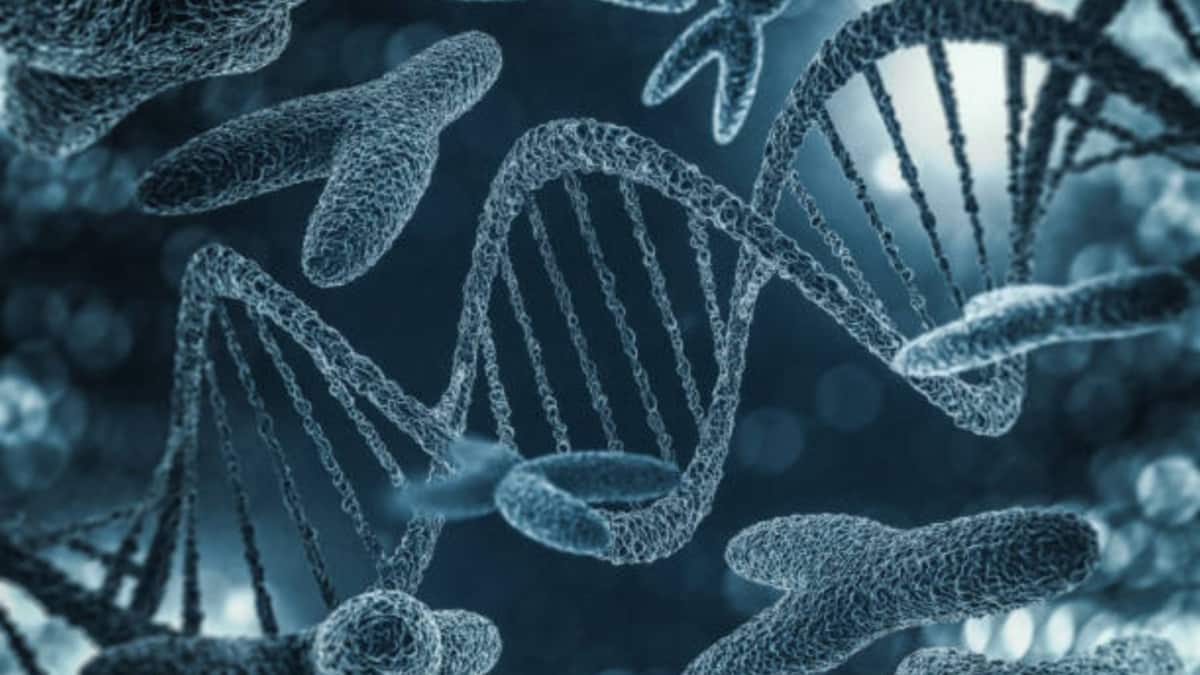
Nearly two decades ago, Australian evolutionary biologist Professor Jenny Graves sparked one of the most persistent genetic debates of our time. In a commentary that followed her 2002 research, she calculated that the human Y chromosome has already lost around 97% of its ancestral genes over roughly 300 million years, and, theoretically, could disappear entirely in a few million more.
The hypothesis made instant international headlines. But according to Graves, the media excitement missed the science. “The doomed fate of the Y chromosome,” she later said, was never meant to predict the end of men, but to highlight how sex chromosomes evolve.
Speaking to ScienceAlert, Dr Jenny Graves explained: "It really amazes me that anyone is concerned that men will become extinct in 5 or 6 million years… After all, we have only been human for 0.1 million years. I think we'll be lucky to make it through the next century!"
It’s a striking way of saying that genetic timelines are unimaginably slow, and threats to mankind’s existence in the next hundred years have little to do with chromosomes.
A chromosome that lost 97% of its original genes
When sex chromosomes first evolved, X and Y were once identical, with around 800 genes each. But once Y took up the job of male sex determination, recombination stopped in males, and the Y began losing genes, while X stayed more stable.
Today, the human Y has just 3% of the genes it originally shared with X.
This shrinking pattern is what led Graves to argue that the Y is a “crumbling” chromosome undergoing gradual, inevitable erosion.
If the Y vanishes, do men vanish? Haha, absolutely not!
Contrary to dystopian imagination, studies in rodents and other animals show species can lose or replace the Y chromosome and still reproduce.
ScienceAlert reports that:
- several mole vole species now have no Y chromosome at all
- in spiny rats, the original Y has been replaced by a different sex-determining system
Those species still produce males normally.
Graves notes that if humans ever evolved a replacement mechanism, it would likely be invisible unless scientists actively screened for it. We wouldn’t suddenly notice a world without Y, we would just continue reproducing through another genetic pathway.
But another school of thought strongly disagrees
While Graves expects the Y to eventually disappear, MIT evolutionary biologist Jenn (Jennifer) Hughes argues the opposite: that the Y chromosome is stabilising, and that its most crucial genes remain intact.
Hughes told ScienceAlert that comparative genomic analysis suggests gene loss slowed dramatically, and may have almost stopped tens of millions of years ago.
"Our work comparing Y gene content across many mammals showed that the gene loss was rapid at first, but quickly levelled off… The genes retained on the Y serve crucial functions across the whole body.", Jennifer Hughes reportedly told ScienceAlert.
To Hughes, this deep conservation means selective pressure protects the Y, making future extinction unlikely.
Graves counters that even a stabilised chromosome can still be replaced given enough evolutionary time:
“Anything from now to never,” she told ScienceAlert, describing her estimate of millions of years as a hypothetical range, not a literal countdown.
In other words, this is not a timer, it’s an evolutionary thought experiment.
So should men worry? No, not at all!
The debate is academic, not apocalyptic. Even if the Y vanished millions of years from now, humans would almost certainly evolve a different male gender-determining system long before anything dramatic happened.
The bigger issues facing male reproductive health today, falling sperm counts, toxins, lifestyle, tobacco, alcohol, and sedentary habits, have nothing to do with long-term chromosome evolution and everything to do with modifiable choices right now, as fertility specialists in India repeatedly emphasise.
As Dr Varsha Samson Roy (Head of Embryology, Birla Fertility & IVF) explains, the Y chromosome is small, “almost insignificant” compared to the X chromosome, yet “this tiny piece of genetic material decides something as fundamental as the male sex.”
One functional challenge, Dr Varsha notes, is that the Y chromosome “does not really have a partner to repair itself” the way ordinary chromosome pairs do. Because it “has no true pair”, once a gene is damaged or becomes redundant, “it can’t always be regained,” a vulnerability that has gradually stripped the Y “down to its bare essentials” over evolutionary timescales.
Rather worry about why sperm counts continue to fall!
Crucially, what concerns clinicians today isn’t likely extinction millions of years away, but the present-day collision between a genetically fragile chromosome and modern lifestyle stresses. Across the world, sperm counts continue to fall.
Some of this is linked to smoking, alcohol, obesity, long sitting hours, stress and environmental pollutants. But “when you combine those factors with a chromosome that already has limited resilience, the picture becomes more complicated,” Dr Varsha explains. Fertility “may not be as robust as many assume.”
Research also connects Y-chromosome loss with wider male health risks, heart disease, Alzheimer’s and certain cancers. The evidence is still developing, but suggests that the chromosome’s influence extends well beyond sex determination and sperm. That makes its gradual erosion “more than just an academic debate.”
Dr Varsha Roy alerts that the long view shouldn’t distract from the immediate issue: declining male fertility today. Unlike evolution, lifestyle is modifiable. Weight control, regular exercise, reducing toxins, and cutting down on smoking and alcohol “can improve sperm quality.” Simple steps like semen analysis are often delayed, even though they are non-invasive and provide essential information.
The bottom line:
The Y chromosome is shrinking, yes.
But men are not disappearing, and certainly not soon.
For now, the fate of the Y chromosome remains an open question, and an elegant reminder that evolution moves slowly, science argues openly, and sensational predictions should never replace careful evidence.