Eight years ago, Sumathi’s life was marked by relentless struggle. At 53, she worked as a daily labourer with minimal support from her husband, barely earning enough to cover food and mounting debts. The dream of educating her children seemed a distant luxury. “My life was as fragile as a plant that wilts with a little moisture,” she confesses.
Yet today, Sumathi (photographed below) stands as a beacon of hope and transformation, not just for her family but for the entire ecosystem of Tamil Nadu’s Cauvery River basin.
That transformation took root when Sumathi joined the Cauvery Calling Nursery at Cuddalore, a massive 30-acre tree nursery run and managed almost entirely by rural women like her. Home to one of the world’s largest single-site nurseries, it produces a staggering 85 lakh saplings annually. This is not just any nursery. It is the lifeblood of one of India’s most ambitious ecological movements aimed at restoring the Cauvery River, the vital water source sustaining over 8.4 crore people across southern India.
Like Sumathi, 35-year-old Saranya (photographed below) initially viewed the nursery as just another means to earn a living.
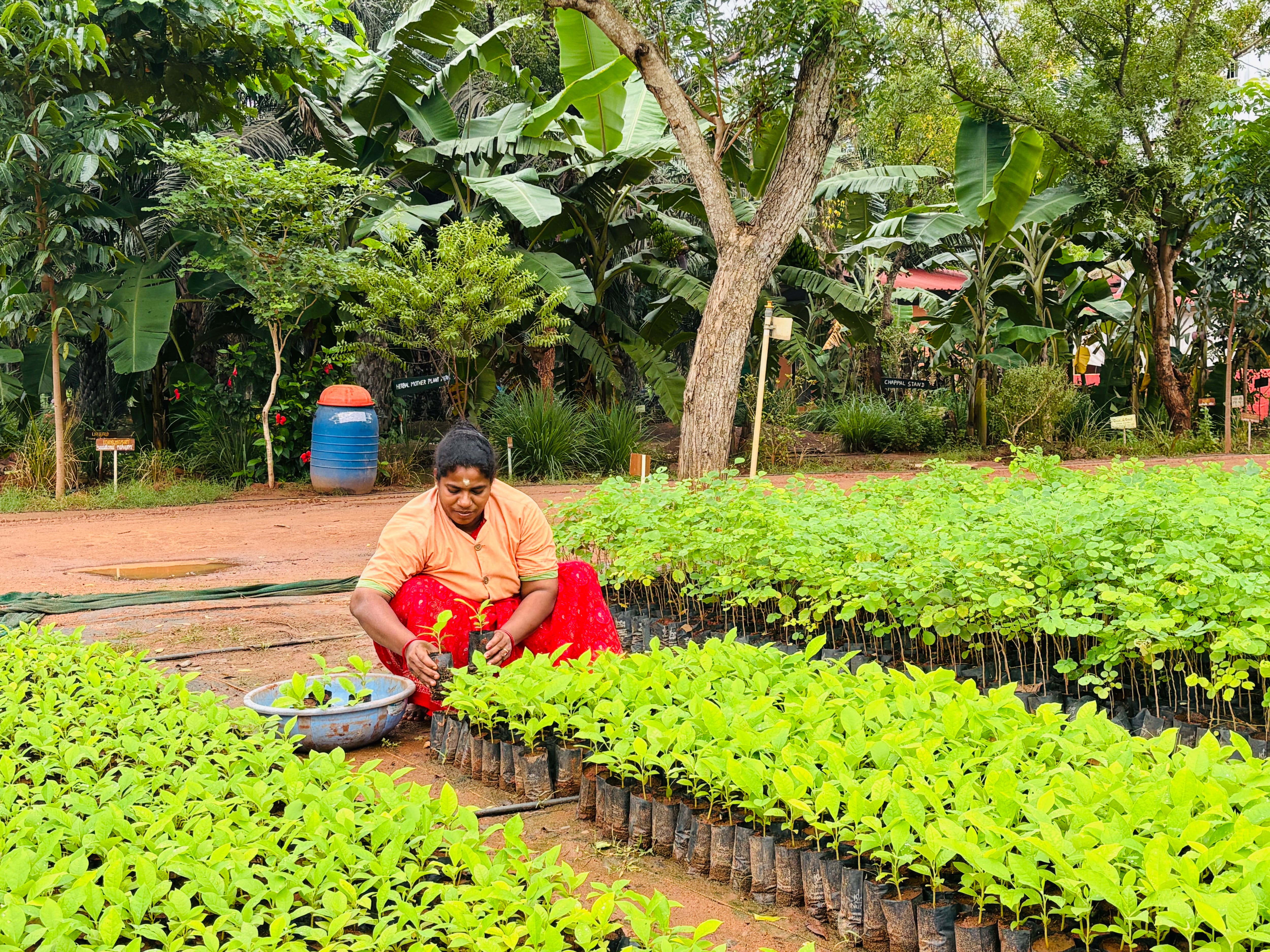
It’s a mission intertwined with deep purpose and newfound dignity. After joining the nursery, Sumathi began receiving a steady monthly salary, a major shift from her previous daily wages, enabling her to support her children’s education and secure bank loans. “This nursery has uplifted my life,” she says, voice full of gratitude.
Like Sumathi, Saranya, initially viewed the nursery as just another means to earn. But over time, she came to realise the profound impact of their work: “Every motherbed we prepare feels like nurturing a child,” she says.
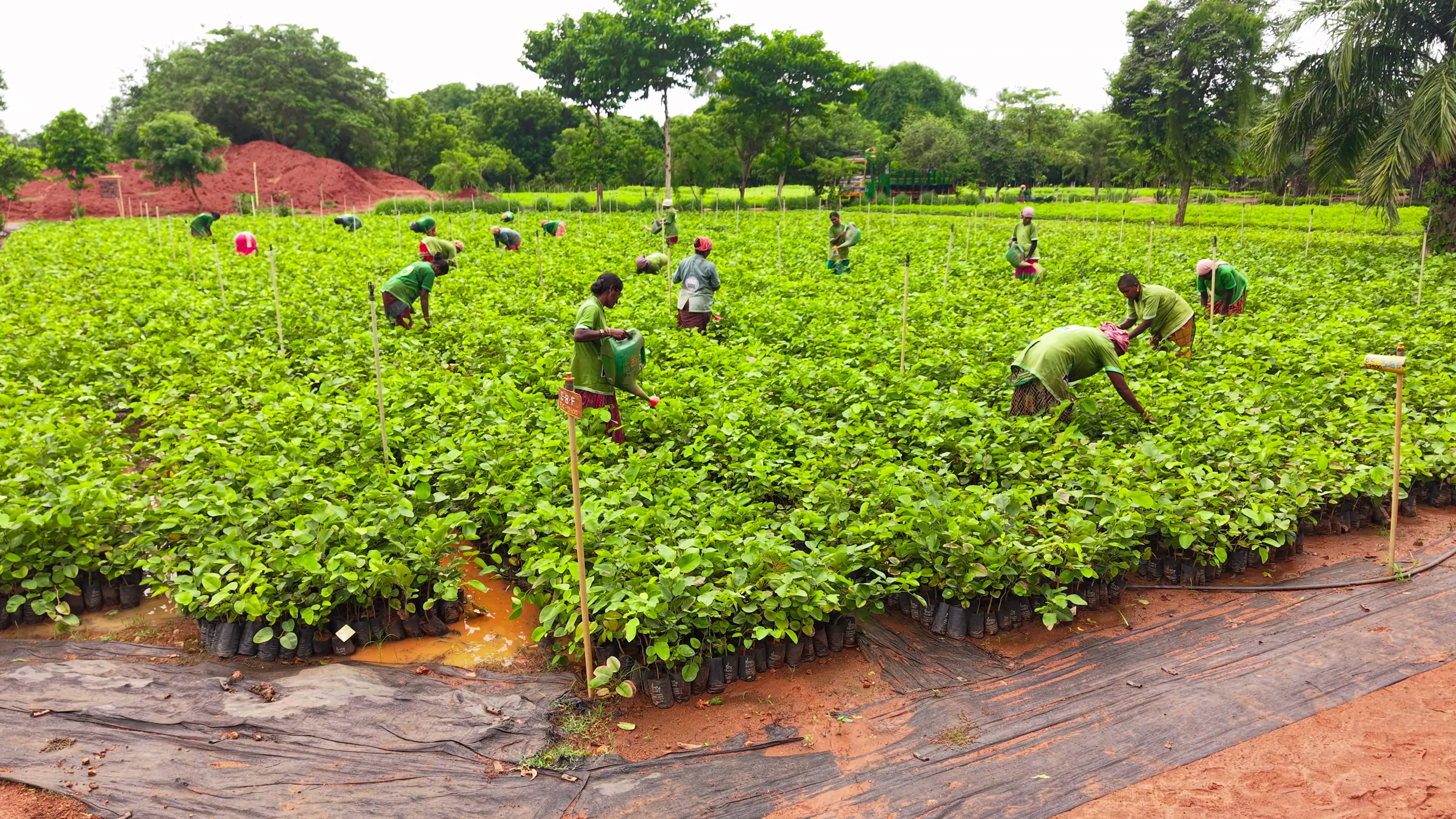
The women’s reverence for their labour stems from the nursery’s visionary goal: planting 242 crore trees throughout the Cauvery basin - a target set by the Cauvery Calling movement launched by Sadhguru as part of a larger ecological restoration campaign.
The nursery’s daily operations read like a symphony of synchronised efforts. The women oversee seed selection, propagation, sapling nurturing, and quality control with remarkable expertise. They have embraced innovative tools like the Japanese 5S system to maintain cleanliness and efficiency, skills that many proudly apply in organising their own homes.
The collective has become not just a workforce but a thriving community, where yoga practice and celebrations foster bonds beyond labour, and leadership is nurtured among them, all underpinned by their shared commitment to restoring the Cauvery.
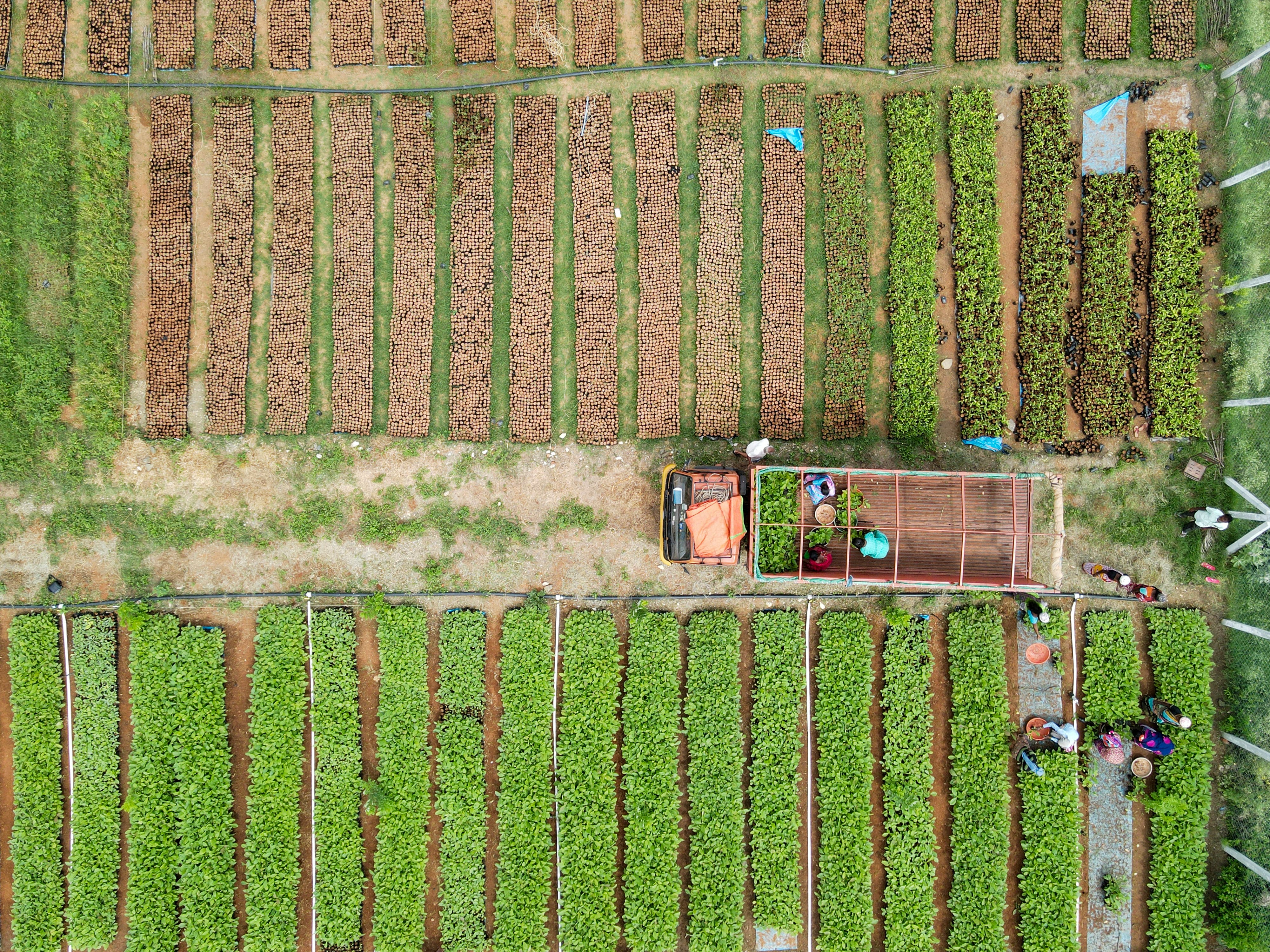
Anand Ethirajulu, Project Director of Cauvery Calling and Save Soil, highlights the nursery’s immense scale and ecological significance. “This nursery produces 85 lakh saplings yearly, across 54 species, including 21 high-value timber varieties like teak, mahogany, rosewood, sandalwood, and red sandalwood,” he explains. “Last year alone, the nursery supported planting over 1.36 crore saplings across 34,000 acres.”
The Cauvery Calling movement uniquely blends ecological restoration with economic empowerment through tree-based agriculture. Farmers, many dependent on the Cauvery River for irrigation, are educated about integrating trees within their crop lands. This revitalises soil health, enhances water retention, boosts biodiversity, and provides long-term income through timber and fruit harvests.
The financial impact is striking. Over 30,000 farmers annually adopt this model, signalling a return to ancestral wisdom that is also perfectly suited to modern sustainability. Those adopting tree-based agriculture have seen income increases between 300% and 800%.
One inspiring story shared by Anand describes a model farmer who cultivated 15 tree species alongside vegetables and flowers, sustaining his family’s daily livelihood and building assets that eventually funded his son’s wedding without loans. The son, once sceptical, became a campaigner after witnessing the benefits, motivating over 1,000 farmers in the region.
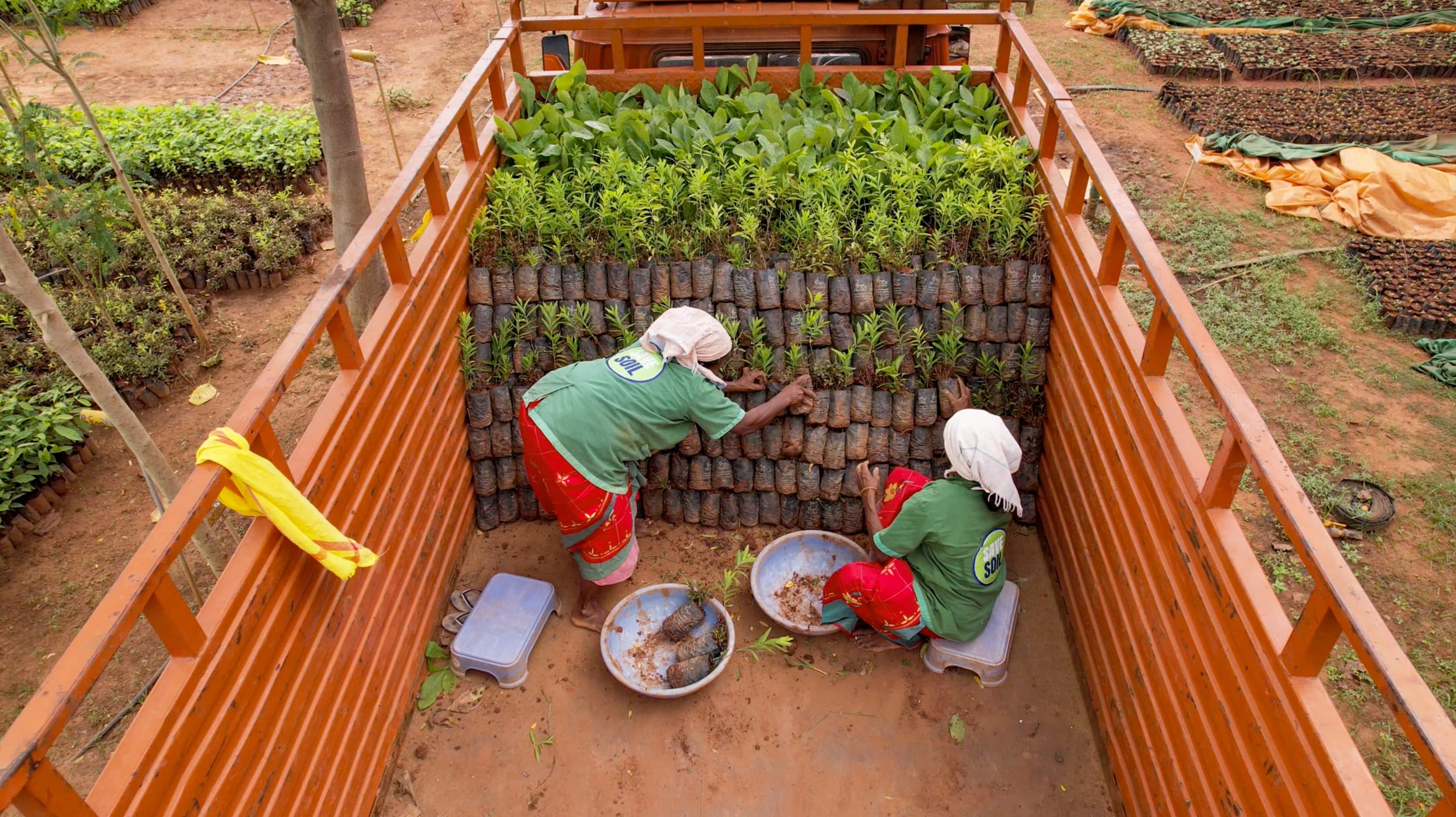
Meanwhile, women like 44-year-old Vennila and 40-year-old Selvi offer touching human dimensions to the nursery’s story. Vennila, once scorned and humiliated due to her lack of agricultural knowledge and family hardships, found new skills and purpose growing 54 types of trees and became a trusted leader. Selvi, a survivor of domestic violence and health challenges, credits the nursery’s opportunity for her ability to educate her daughter and rebuild her family’s life with dignity.
Their collective stories illustrate how ecology, empowerment, and community intertwine at the nursery. Beyond producing saplings, these women are rewriting their futures and those of their villages, fostering a green revolution rooted in love, leadership, and resilience.
This grassroots-driven nursery is more than a project. It is a blueprint for restoring India’s rivers, supporting sustainable livelihoods, and building generational legacies through nature’s wisdom. Every sapling planted here carries a promise of cleaner water, richer soil, and empowered communities. In Cuddalore, a green future blooms: one nurtured by hands that have known hardship but now cultivate hope.
(A Teach for India Alum, Asthana has worked in the education sector and is currently exploring her twin passions of yoga and writing at the Isha Yoga Center, Coimbatore)