As Iran's clerical leadership struggles to contain protests fuelled by economic hardship and political fatigue, India is watching events unfold with quiet unease.
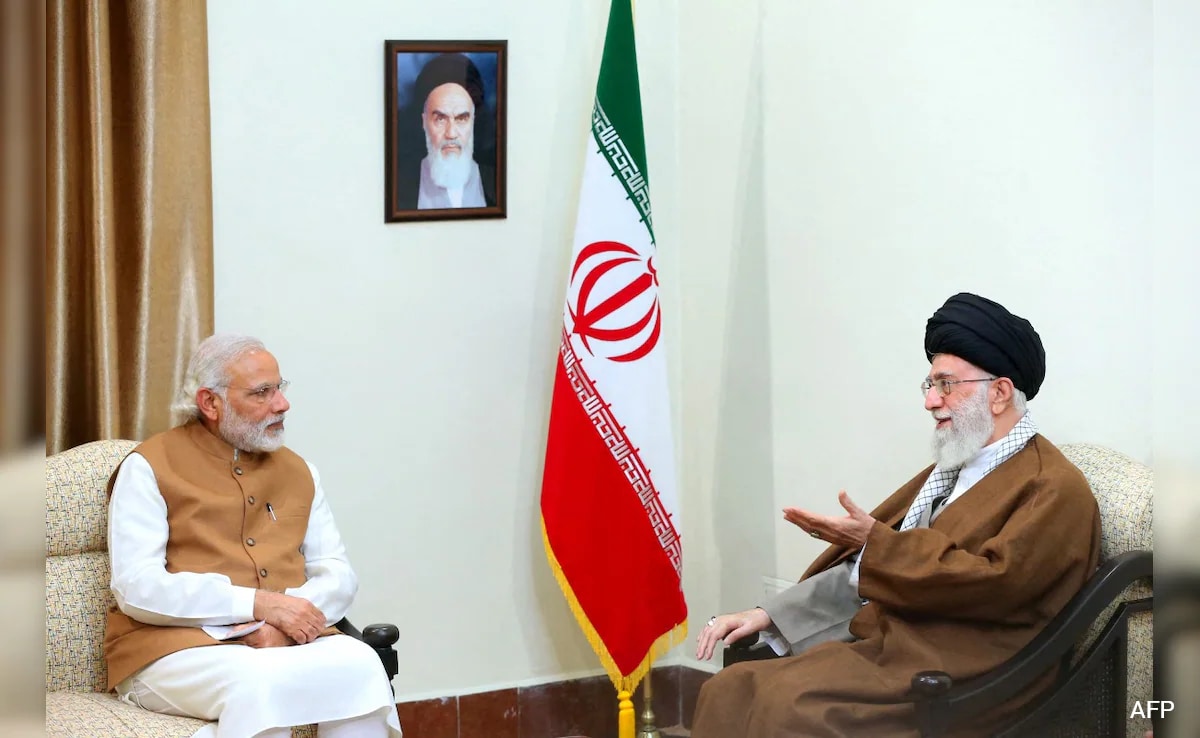
As Iran's clerical leadership struggles to contain protests fuelled by economic hardship and political fatigue, India is watching events unfold with quiet unease. New Delhi and Tehran have been strategic regional partners with deep historical ties, shaped by geography, access, and balance. With Pakistan blocking India's overland routes to Afghanistan and Central Asia, Iran has long been New Delhi's only viable western corridor. The Shia leadership in Tehran has also counterbalanced Pakistan's influence, acting as a stabilising pillar in India's carefully calibrated West Asia policy.
A weakened or collapsing Iranian state could adversely impact India's strategic manoeuvring space in the region, already shrinking due to regime change in Bangladesh, terror challenges from Pakistan, China's regional expansion, and the US policies under Donald Trump, pushing the world into crisis after another. An unstable Iran is likely to reshape diplomatic alignments, trade routes and security calculations that New Delhi has spent decades managing.
ALSO READ: US Could Hit Tehran In 24 Hours, Warn European Officials Amid Iran Protests
Why Iran Matters To India?
Chabahar Port: With Pakistan denying India overland access to Afghanistan and Central Asia, Iran has emerged as India's trusted land bridge for westward connectivity. At the core of India's strategy lies Iran's Chabahar Port, which has been designed to give New Delhi direct access to the Iranian coast, which connect India to Central Asia through land and rail networks, bypassing Pakistan.
But all connectivity corridors need political coherence between states, security guarantees and long-term planning, and any regime change in Tehran can jeopardise that.
Talking with The Times of India, Rajan Kumar, a professor at Jawaharlal Nehru University, said, "In a post-Khamenei power struggle, Chabahar risks becoming a hostage to instability rather than a strategic asset."
ALSO READ: 3,400 Dead In Iran, Trump Says Tehran Won't Execute Protesters
Pakistan: Iran, despite being a Muslim-majority country, has historically balanced Pakistan's influence in the region. The Shia leadership in Tehran have been a vocal critic of Sunni extremist groups in Pakistan, spreading an anti-India narrative and targeting Indian interests.
Tehran's Shia positioning deeply worked in favour of India in the 1990s and early 2000s, when the Taliban, backed by Pakistan, was trying to secure "strategic depth" in Afghanistan, while Iran and India were working to back the anti-Taliban forces. This convergence limited Pakistan's influence in the region, preventing it from monopolising Afghanistan's political future. Even when Islamabad pushed for international sanctions on India over Kashmir in the mid-1990s, Tehran came to Delhi's aid.
If Iran weakens internally, Pakistan stands to gain indirectly, and its counterweight in the region will weaken.
Trade: India is also Iran's eighth-largest trading partner, with bilateral trade amounting to about $1.3-$1.7 billion in the past year. New Delhi has also invested over $1 billion into Chabahar and related projects. Delhi has already delayed or restructured parts of the project to comply with US sanctions. Any regime change could impact these investments, directly hitting taxpayer money.
ALSO READ: Air India, IndiGo Flights Impacted As Iran Shuts Airspace Amid US Tensions
China's Influence: While Iran tilts in favour of India when it comes to Pakistan, its favouritism of China can't be missed. Beijing and Tehran inked a 25-year strategic cooperation pact in 2021, and its impact can also be seen in the trade matrix. China was Iran's largest trade partner in 2025, with over $14.5 billion worth of Iranian goods going to China.
In fact, with multiple Western sanctions paralysing Iran's economy, Tehran has heavily relied on Beijing to buy its discounted oil and fund infrastructure projects. India's presence in Iran – especially at Chabahar – acts as a modest counterbalance to China's inroads.
If chaos persists in Iran, even a new regime is likely to lean on Beijing for security and investment, increasing its influence in the region. As per a Times of India report, Iranian officials are already discussing Chinese-funded power plants and port projects in Khuzestan.
India's Next Move
According to Nirupama Menon Rao, a former Indian diplomat who served as Indian Ambassador to the United States, China and Sri Lanka, so far, India's approach to Iran has to be measured and carefully calibrated.
"It should keep a certain distance, because the situation in Iran has reached a point where outside actors cannot control the ramifications, nor reliably shape the outcome. The first duty is protection: the interests of Indian citizens in Iran, and in the wider region, must be safeguarded through strong consular readiness and contingency planning," she said in a post on X.
Rao noted that India should closely gauge developments from all sides, avoid rushing to conclusions, and build its assessments around multiple plausible scenarios rather than a single prediction.
"What matters is not commentary but preparedness: understanding where this could go, what spillovers are most likely, and which channels of communication must remain open," she said.
"If Iran tips into prolonged instability or fragmentation, the consequences will not stay contained. Chaos in West Asia can travel fast through energy markets, shipping routes, diaspora vulnerabilities, and the wider ecology of militancy and criminal networks. South Asia is not insulated from that. India's strategy, therefore, should be one of strategic caution, steady engagement, and continuous assessment, while resisting the temptation to posture or overinterpret an unfolding crisis," Rao added.