Welcome to DailyAdda News (“we”, “our”, “us”). By downloading, accessing, or using the DailyAdda News mobile app or website, you agree to the following Terms & Conditions. Please read them carefully.
🔹 1. Use of the App
DailyAdda News provides:
Bengali, Hindi & English news
RSS-based headlines
Short summaries
External links to publishers
Local updates, alerts & information
You agree:
To use the app legally
Not to misuse or interfere with its services
Not to copy, distribute or republish our summary content without permission
🔹 2. Content Sources & Copyright
DailyAdda News shows:
Headlines
Short rewritten summaries
Source credit
Link to original article
We do not claim ownership of original articles from external publishers.
You must access full articles on the publisher’s website. External content belongs to respective copyright holders.
🔹 3. User Conduct
You agree not to:
Harm or disrupt the app
Attempt unauthorized access
Upload harmful material
Scrape data or automate requests
Use the app for political manipulation or spreading misinformation
🔹 4. Third-Party Services
DailyAdda News uses:
External RSS feeds
Third-party news websites
Google AdMob
Analytics services
We are not responsible for:
Accuracy of external content
Availability of third-party websites
Their privacy policies or terms
🔹 5. Notifications
DailyAdda News may send:
Breaking news alerts
Job alerts
Local city updates
Weather warnings
You may disable notifications anytime in device settings.
🔹 6. No Guarantee of Accuracy
News is subject to change. We try to provide accurate updates but:
We do not guarantee 100% accuracy
We are not responsible for errors or delays
Users should verify important news directly from official sources
🔹 7. Advertisements
DailyAdda displays ads through:
Google AdMob
Other ad partners
We are not responsible for:
Content of ads
Actions taken on third-party ad pages
🔹 8. Limitation of Liability
DailyAdda News is not liable for:
Data loss
App downtime
Incorrect or outdated news
Third-party website actions
Financial, personal, or business loss caused by news content
Use the app at your own risk.
🔹 9. Changes to the Service
We may modify:
Features
Categories
App layout
Terms & Conditions
We can also suspend or discontinue parts of the service.
We use cookies to ensure you get the best experience on our website. By continuing to use our site, you accept our use of cookies,
Privacy Policy,
and
Terms of Service.
Modern life has quietly trained the human body to do one thing extremely well, sit. From office desks and long commutes to scrolling on sofas and binge-watching in bed, movement has slowly disappeared from daily routines. By 2026, health experts and fitness coaches agree that sitting for long hours has become one of the biggest silent threats to physical wellbeing. That is exactly why mobility training is emerging as the most powerful lifestyle reset of this decade. It is not about building six-pack abs or running marathons. It is about restoring the natural movement your body was designed for, and the results are transforming lives.
Extended sitting compresses the spine, weakens muscles, stiffens joints, and slows circulation. Over time, this creates chronic back pain, tight hips, frozen shoulders, neck stiffness, and low energy levels. Many people experience constant fatigue without understanding that their body is imply starved of movement. Doctors now warn that even regular gym sessions cannot fully undo the damage of long sitting hours unless the body is trained to move correctly throughout the day.
What Exactly Is Mobility Training?
Mobility training focuses on improving the way joints, muscles and connective tissues move together. Unlike stretching, which targets flexibility alone, mobility training restores control, strength and range of motion in every movement. The result is smoother walking, pain-free sitting, better posture, easier bending and stronger everyday function. In 2026, this approach is replacing traditional fitness routines because it fixes the root problem instead of just burning calories.
As work-from-home and screen-heavy lifestyles continue, people are turning to mobility training for complete physical renewal. Just 15–20 minutes a day can undo years of stiffness, improve blood flow, boost metabolism and even sharpen mental focus.
4 Essential Mobility Exercises To Restore Movement And Flexibility
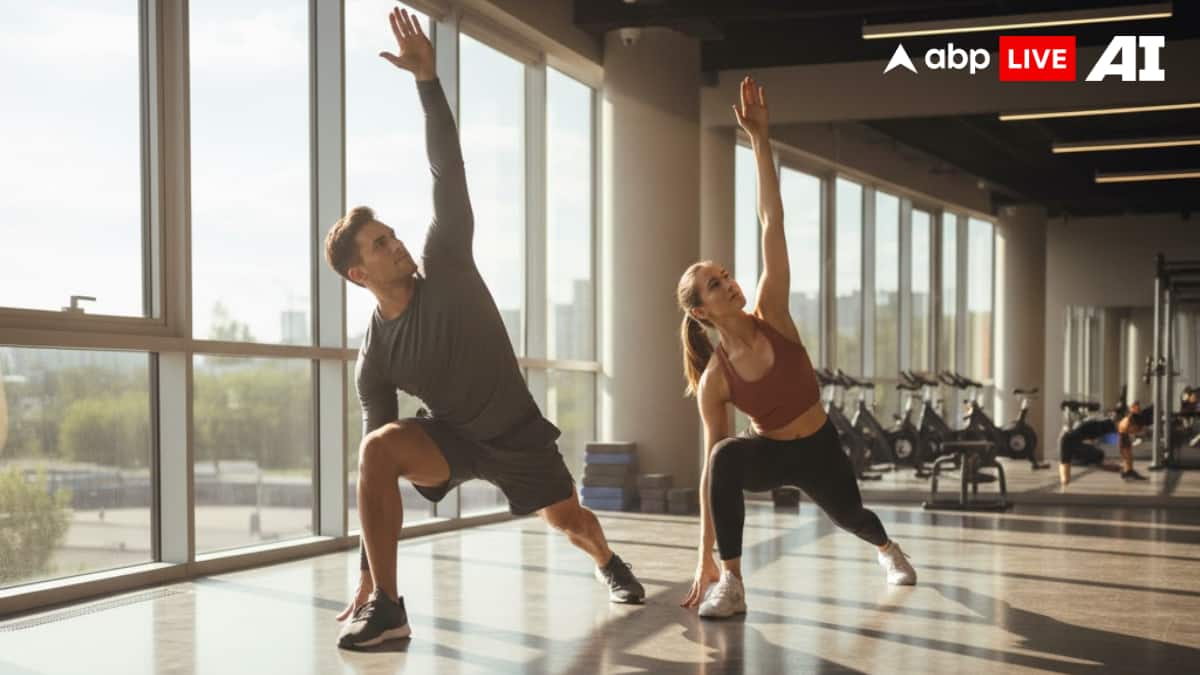
1. World's Greatest Stretch
(Image Source: ABPLIVE AI)
This full-body movement earns its name for good reason. The World’s Greatest Stretch simultaneously improves mobility in the hips, hamstrings, spine, shoulders and ankles, making it one of the most efficient exercises you can perform. Begin in a deep lunge position with your back knee off the floor. Place the opposite hand on the ground and gently rotate your torso upward, extending your free arm toward the ceiling. This rotation activates the thoracic spine while opening tight hip flexors and improving spinal mobility. Move slowly and with control, focusing on breathing deeply into each position. Over time, this exercise helps restore posture, reduce lower back tension and improve overall movement quality. Practising it daily can noticeably enhance flexibility, balance and joint health.
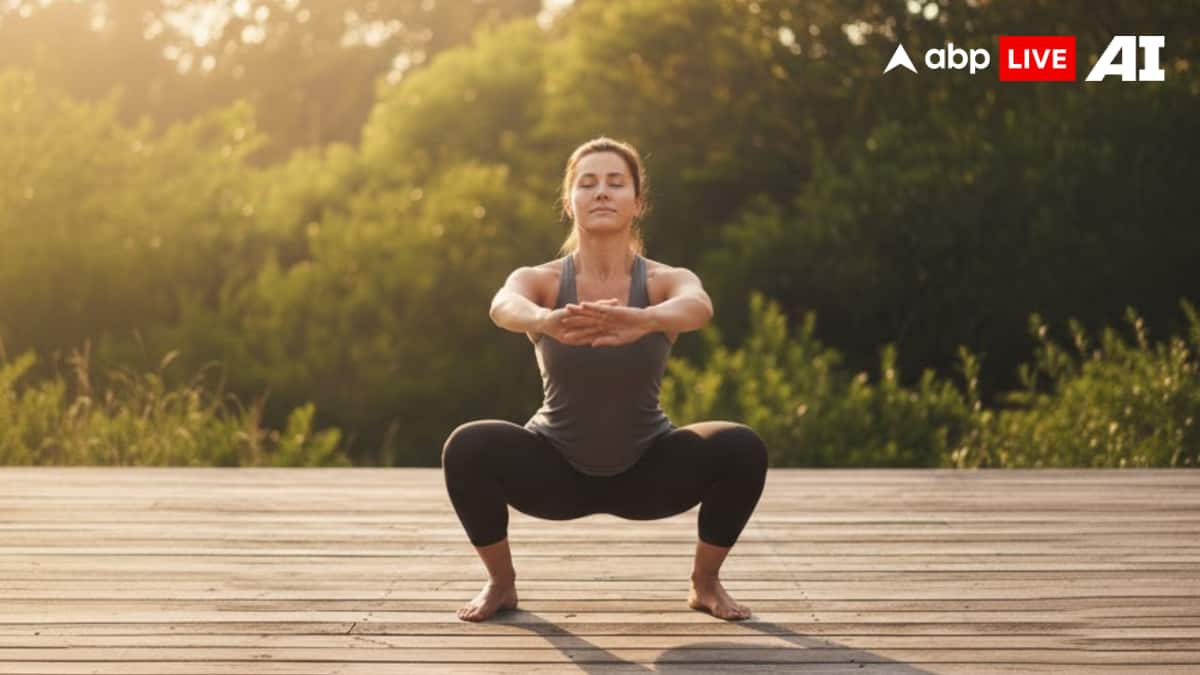
2. Deep Squat Hold
(Image Source: ABPLIVE AI)
The deep squat is a natural human position that many adults lose the ability to perform due to prolonged sitting and limited movement. Practising the deep squat hold helps restore mobility in the ankles, knees, hips and spine. Begin by standing with feet shoulder-width apart and slowly lower into a deep squat position, keeping your heels flat on the floor. Allow your chest to remain upright and gently press your elbows into your knees to open the hips. Hold this position for 30–60 seconds while breathing slowly and deeply. Over time, this exercise improves joint health, enhances posture, reduces lower-body stiffness and increases circulation. It also helps retrain your nervous system to feel comfortable in deeper ranges of motion.
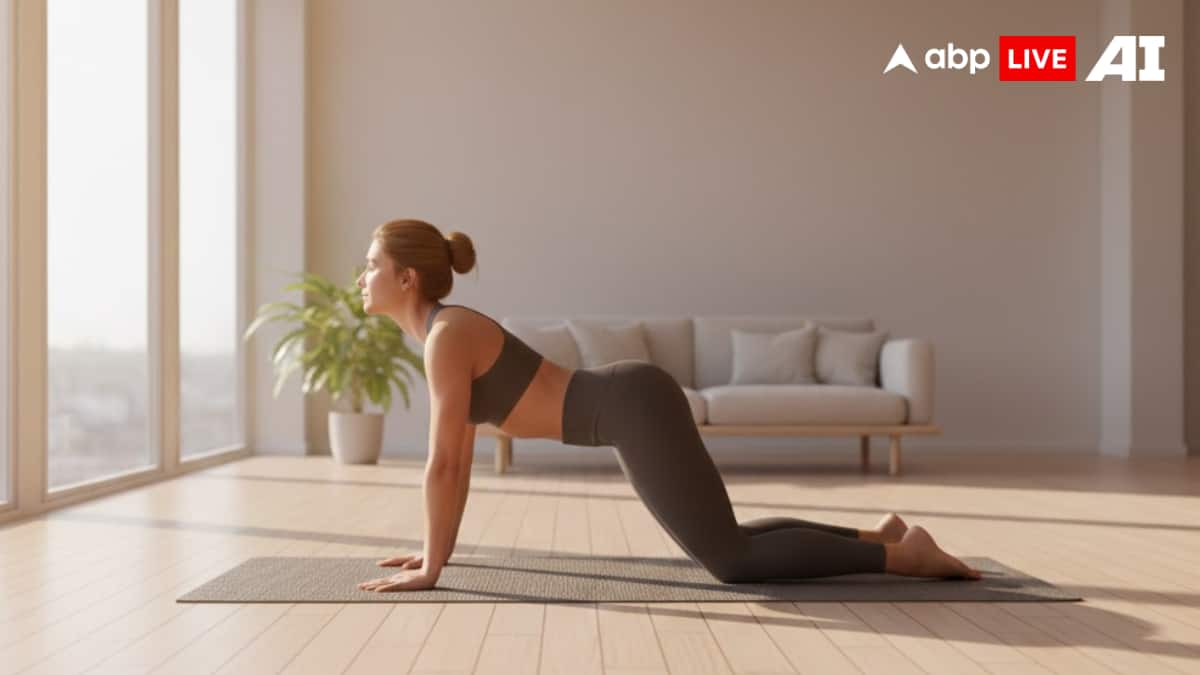
3. Cat-Cow Flow
(Image Source: ABPLIVE AI)
This gentle spinal movement improves mobility throughout the entire back while promoting relaxation and stress relief. Begin on all fours with hands under shoulders and knees under hips. Inhale deeply as you arch your back, lifting your head and tailbone (Cow position). Then exhale slowly as you round your spine, tucking your chin and pelvis (Cat position). Move fluidly between these two shapes for 60–90 seconds. This rhythmic motion lubricates the spinal joints, releases tension in the neck and lower back, and improves communication between the nervous system and muscles. Practised daily, Cat–Cow helps counteract the negative effects of sitting, reduces stiffness and improves posture.
4. Hip Flexor Stretch With Reach
(Image Source: ABPLIVE AI)
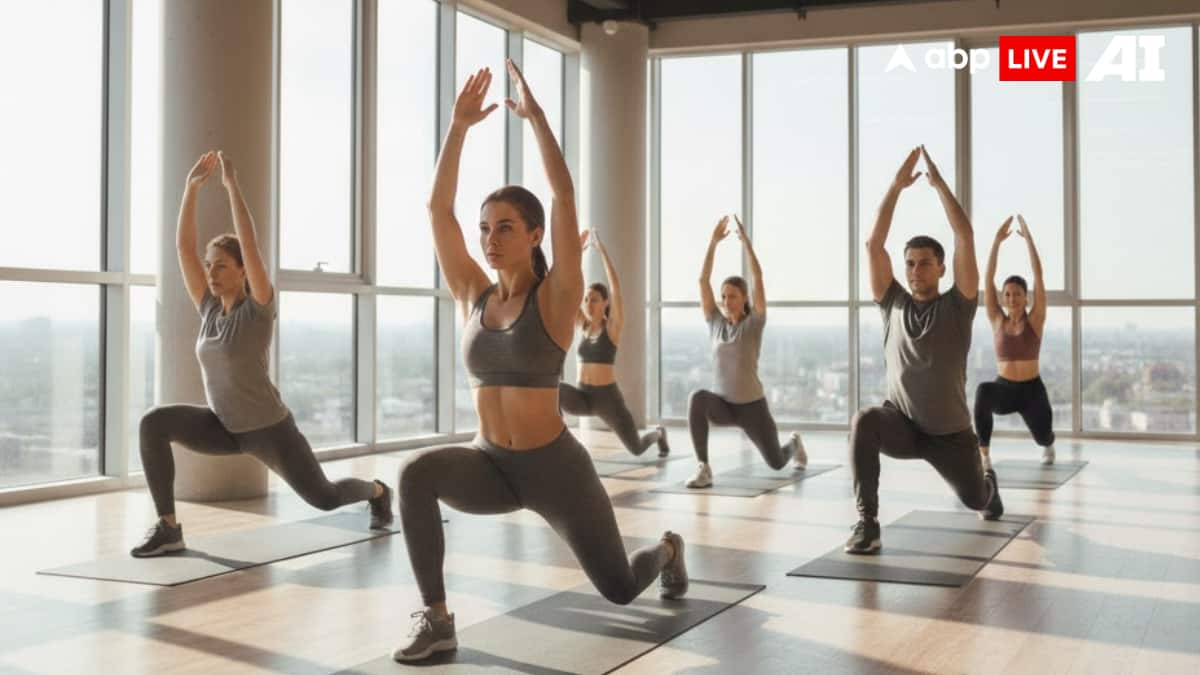
Prolonged sitting shortens the hip flexors, which often leads to lower back pain, poor posture and reduced walking efficiency. This stretch directly targets those tight muscles while also engaging the core and spine. Begin in a kneeling lunge position with one knee on the floor and the opposite foot forward. Gently shift your hips forward until you feel a stretch in the front of your back leg’s hip. Raise both arms overhead and slightly lean back while maintaining core engagement. Hold this position for 30–60 seconds before switching sides. This movement improves hip mobility, reduces pelvic tightness and helps restore natural posture.
Office workers use mobility training to fix back pain. Students use it to improve posture. Seniors rely on it for balance and joint health. Athletes use it to prevent injuries. That universality is why mobility training is becoming the most inclusive fitness movement of 2026.
Beyond physical benefits, mobility training reduces stress, improves sleep, increases confidence and restores the feeling of being comfortable in your own body. It turns daily movement into something joyful instead of painful.