
Search

    Language Settings
    Select Website Language

    GDPR Compliance

    We use cookies to ensure you get the best experience on our website. By continuing to use our site, you accept our use of cookies, Privacy Policy, and Terms of Service.

    dailyadda
    dailyadda

    Sarvam AI vs Silicon Valley vs Beijing vs Brussels: 4 Roads To AI Power

    4 hours ago

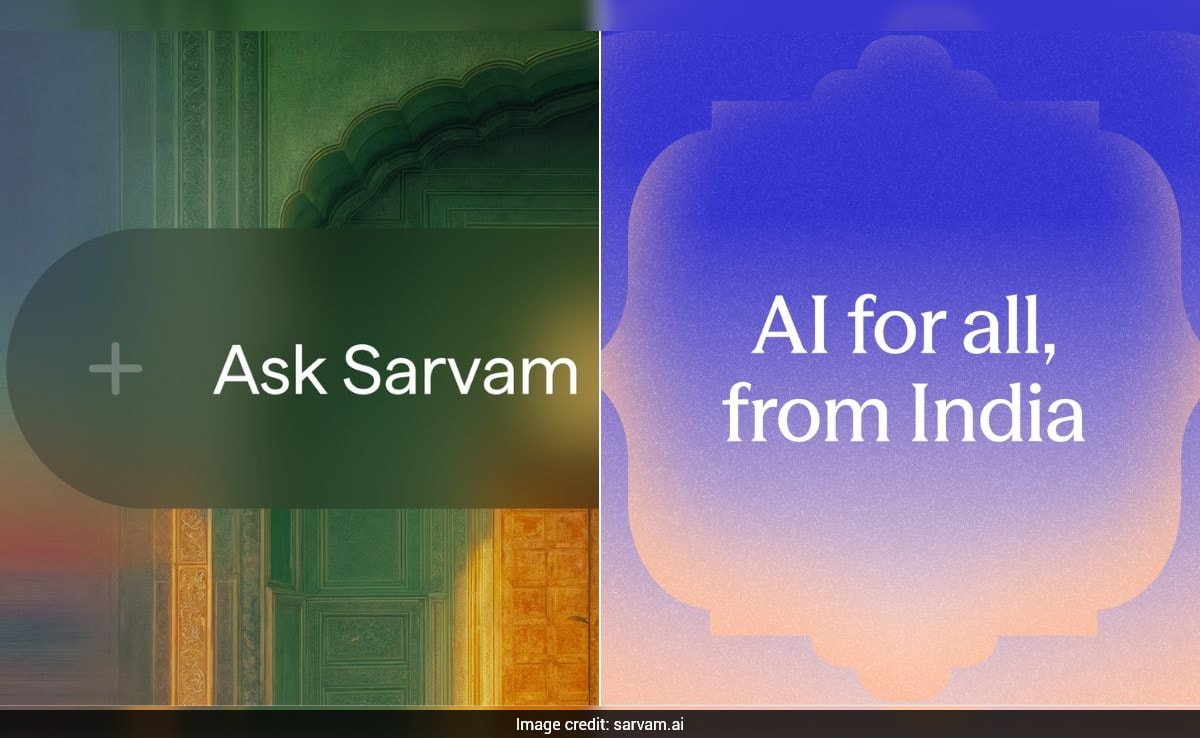
    Sarvam AI has emerged as a new player in the crowding field of AI. But with its Indic language support and thrust on democratising digital access, Sarvam AI is set to challenge the dominance of US and China.

    Artificial intelligence is no longer just a technology story - it is a power story. As nations race to build advanced AI systems, they are also shaping competing models of innovation and governance. The United States is betting on Big Tech speed and market dominance. China is folding AI into state strategy and to augment surveillance capacity. Europe is moving cautiously, building legal guardrails before scale. Now, with the launch of Sarvam AI, India is stepping in with a different approach - multilingual, sovereign AI aimed at inclusion as much as influence. Here's a look at how these four powers, with four different philosophies, that are defining the future digital order.

    In Trump land, there is Big Tech dominance with OpenAI, Google, Microsoft and Meta leading the AI race since they command vast computing infrastructure, talent and private capital. Policy actions such as Executive Order 14179, aimed at removing regulatory barriers to AI leadership, underscore this emphasis on maximising innovation and competitiveness.

    The US model prioritises rapid development, flexible regulatory frameworks and global partnerships. Its private sector's dynamism has helped push AI into products used by billions, but it also raises questions about ethical safeguards and accountability - concerns that sometimes outpace policy responses.

    This private-sector driven model has also produced a new wave of AI heavyweights beyond the well-known names, such as Anthropic, which has emerged as one of the most influential and fastest-growing AI companies, reshaping the competitive landscape alongside incumbents like OpenAI and Google. Founded in 2021 by former OpenAI researchers, Anthropic develops the Claude family of large language models (LLMs) and has rapidly transitioned into a major AI powerhouse. It now generates roughly $3 billion in annualised revenue.

    China's AI strategy, by contrast, is state-led and centrally coordinated. Beijing has invested heavily - reportedly over US $100 billion cumulatively for its AI strategy - to rival the US and propel Chinese companies and research organizations into global prominence. China's strategy focuses on applied AI across manufacturing, governance, robotics and smart infrastructure, leveraging its vast population and data resources. While this results in impressive research outputs and rapid deployment, it often prioritises state control and alignment with national goals over open market dynamics.

    The European Union's road to AI power is markedly different. Instead of letting unfettered innovation lead the way, Europe has chosen to regulate first and innovate within guardrails. The EU AI Act, effective since August 2024, and a 1 billion euro investment plan in October 2025 are designed to tighten safeguards around AI while boosting domestic research and adoption across industries like healthcare, mobility and manufacturing. ย This regulatory framework aims to protect citizen rights, mitigate biases and increase transparency. The European Commission's proposal to pause parts of the AI Act in response to pressure from tech firms and partners is a sign of the tensions inherent in balancing innovation with oversight.

    India's path to AI power is emerging and distinctive. While not yet a global leader in AI research volume or sovereign models, India is rapidly positioning itself as a third pole in the global AI landscape. According to the Stanford Global AI Vibrancy Tool, India ranks third globally behind the US and China, highlighting rapid growth across talent, commercialisation and policy engagement. The IndiaAI Mission seeks to democratise AI, build inclusive ecosystems for multiple languages and domestic needs, and tackle socio-economic challenges at scale.

    Unlike the US, India's strategy blends public-private collaboration and focuses on inclusion and capacity building. It also increasingly attracts global investment - for instance, major data centre and cloud commitments by Google and Microsoft worth billions - which strengthens India's infrastructure and global relevance.

    Also Read | India's Sarvam AI Is All The Rage - Meet The 2 Enginners Behind It

    Sarvam AI, according to its creators, will accelerate India's technological self-reliance by developing "sovereign" AI and top-tier Indic language models that can outperform global counterparts. It will not only help in creating jobs, but also power 22 scheduled languages via tools like Bulbul V3 to democratise digital access.

    Click here to Read More
    Previous Article
    "Why No Bulldozer Action?" Opposition To UP After Lamborghini Crash
    Next Article
    Viral Video: Elderly Bengal Woman Fighting To Save Her Rice Shop Wins Hearts Online

    Related Trending Updates:

    Are you sure? You want to delete this comment..! Remove Cancel

    Comments (0)

      Leave a comment