India and the European Union on Tuesday announced the "mother of all deals", a massive trade pact reached after two decades of negotiation. Prime Minister Narendra Modi noted the agreement "represents about 25 per cent of global GDP, and one-third of
India and the European Union on Tuesday announced the "mother of all deals", a massive trade pact reached after two decades of negotiation. Prime Minister Narendra Modi noted the agreement "represents about 25 per cent of global GDP, and one-third of global trade".
However, consumers will likely have to wait until at least the end of the calendar year to reap the benefits of the deal at the checkout counter, according to Commerce Minister Piyush Goyal.
A formal signing of the deal is expected later this year, following a "legal scrubbing" of the text by officials and ratification by the EU Parliament.
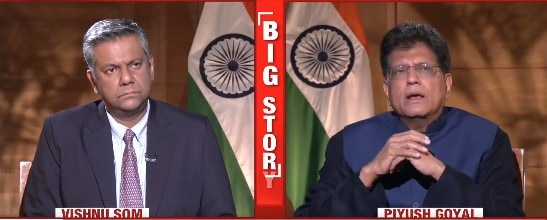
"We need to do the legal scrub, and then the bill will go to the EU parliament for approval. Later in this calendar year, maybe the last quarter is when I expect this to be ready to come into effect," Goyal told NDTV's Vishnu Som.
Immediate Gains for Labour-Intensive Exports
Once implemented, nearly 95 per cent of Indian "labour-intensive" exports will enjoy duty-free access to the European Union, while the import of luxury cars and wines from there will become less expensive in India.
"Almost all our labour-intensive manufactured goods (will) get duty-free access immediately. So we calculated that nearly 95 per cent of our labour-intensive exports get straightaway zero-duty access to the EU," said the Union Minister.
"Over a period of time, they also start getting lower duties, in some cases zero, in some cases phased duty reduction over the next seven to ten years in India," he added.
A Pathway For The "New Middle Class"
The Minister said he sees the deal as a "pathway to many people who are the new middle class". "The 25 crore people were removed out of poverty and were entering the middle class levels. This is an opportunity for them to increase their incomes, become more aspirational, and with growing incomes, look for the better things of life."
"Our view is that we are actually providing the pathway for greater prosperity for 140 crore Indians," he said.
Calling the agreement a "very fair, very balanced agreement", Goyal explained, "What we have done is that we have calibrated it smartly that goods which are required by us immediately for example, there'll be some medical devices, which are good for India, for our healthcare, for our patients, which we have given faster duty elimination or reduction, most cases even immediately. Those, where our industry needed some time to calibrate itself or adjust to the new evolving situation, we have taken a transition period."
Why Is It Called The "Mother Of All Deals"?
When Piyush Goyal was asked why the deal was called the "mother of all deals" despite existing deals with New Zealand, UAE and the UK, he said, "Clearly the size of the scale as it impacts 2 billion people between the European Union and India. The fact that between the two of us, we represent one-third of global trade. Between the two of us, we represent a quarter of global GDP. These truly are two very important, powerful democracies coming together."
The deal will create a market of two billion people with PM Modi and the top EU leadership unveiling a transformative five-year agenda to largely leverage trade and defence in protecting the rules-based world order.
"When (EU Commission President Ursula) von der Leyen spoke about the mother of all deals, she was looking at the future. The world recognises that under Prime Minister Narendra Modi's decisive and very, very strong leadership, India will continue to be the fastest-growing economy for several decades. We are today contributing 20 per cent to global growth," he said.
"FTA is always about the future. Free trade agreement you are planning, (6:42) you're crystal gazing into the future," he added.
Job Creation And Skill Mobility
The deal is expected to further integrate supply chains and strengthen joint manufacturing power between the two economies. It will also cut $4.7 billion in annual tariffs for exporters and create jobs for millions of workers in India and in Europe.
"It'll open up huge job opportunities for India, young Indians. It'll open up a large market in the services space. 144 subsectors and services now will have access to the European market. The mobility partnership will help people with talent, with skills, particularly those who also learn languages to get work opportunities in the European Union," he said.
"But the talent of India, the peaceful and very sober Indian workers who go to different parts of the world or engineers and doctors and caregivers are truly welcome everywhere they go. So, it'll have a benefit to different sections of society in different ways. Our fishermen will benefit hugely," he added.
India's sectors poised to gain from the deal include textiles, apparel, engineering goods, leather, handicraft, footwear and marine products, while the EU's gains will be in wine, automobiles, chemicals and pharmaceuticals, among others.
A quota system for automobiles, wines and whisky has been agreed on, bringing down steep duties.
"Our textile industry is one of the biggest gainers. Everything in textile goes duty-free to the EU from day one," the Commerce Minister said.
He also said that in the volatile, complex geopolitical situation, the visit of the European Union leaders is "truly historic".
"India is negotiating smart, is negotiating fair deals, and is negotiating opportunities for our youth, which are unparalleled," he said.
'Coming Closer To India-US Deal'
Piyush Goyal also insisted that India is having "very good discussions " with the US over a long-awaited trade deal. Despite being one of the first governments to start trade negotiations with the Trump administration, India remains one of the few big economies yet to clinch a deal.
"I am in regular contact with my counterparts. I think we'll have an equally robust, equally good deal with the United States of America quite soon."
Goyal, who refused to give a time period, insisted, "We're coming closer to hopefully conclude a good deal in the near future".