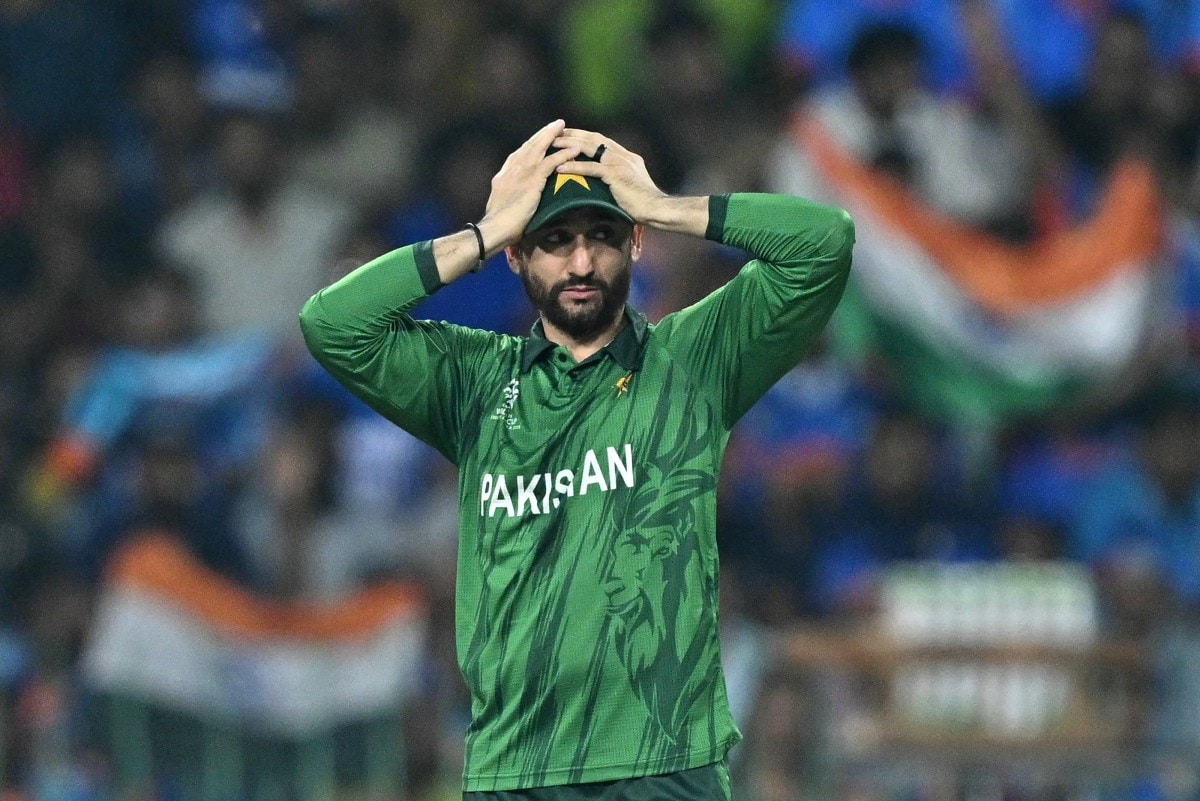
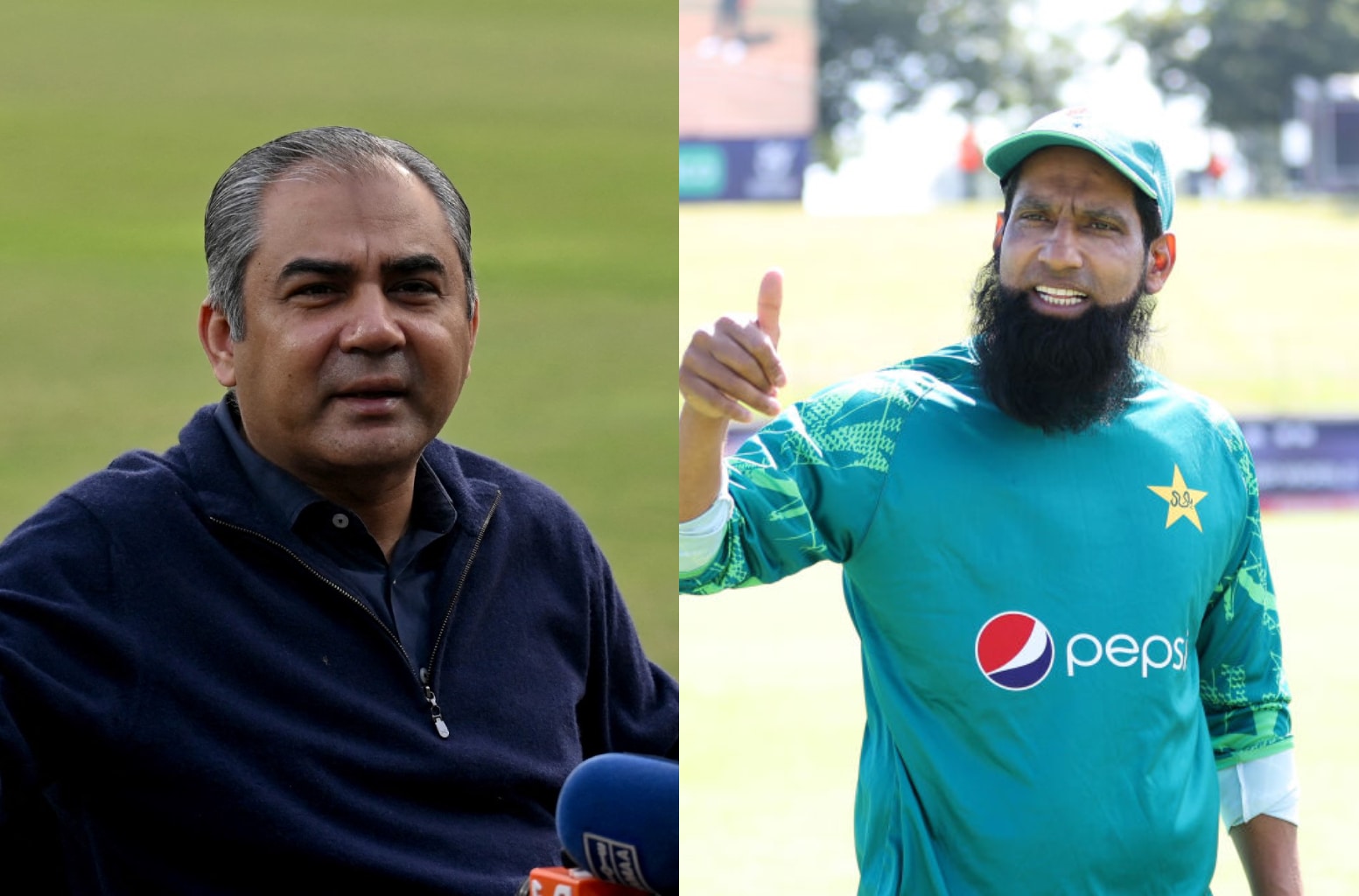
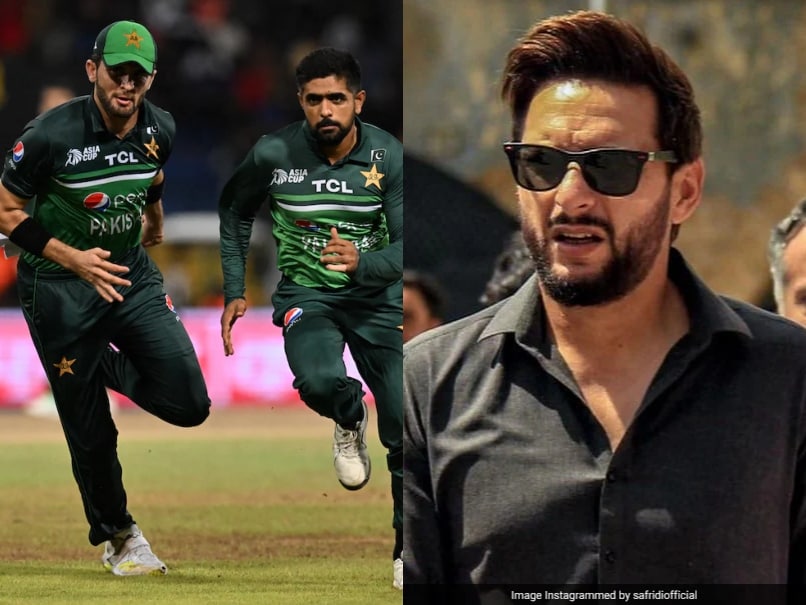
In March last year, I had written about why Pakistan cricket is in ruins - simply because it is its own worst enemy. Pakistan just proved that again yesterday.
I am not entirely certain who I felt more sorry for after the conclusion of the latest instalment of the India vs Pakistan cricket "rivalry" (if one can still call it that). My heart went out to the ticket-buying public in Colombo. According to news reports, about 18,000 Indian and 12,000 Pakistani fans travelled to Sri Lanka for this match, which was a sellout. Did those in the stadium get their ticket's worth? Not to mention the money they spent on travel, stay, food, etc? Definitely not. One also felt a twinge of sadness for the broadcasters. How could you expect each and every cricket fan who had tuned in to stay interested in a "contest" that was pretty much done and dusted in the first five overs of the second innings (by which time Pakistan had been reduced to 34/4 in their chase of 176)? How many people would have just lost complete interest in the match at the time?
I know I did.
Did I feel sorry for the Pakistan team and their entire cricketing establishment, though? Not really. After all, what I witnessed on Sunday didn't surprise me one bit. Sure, this was the biggest margin of victory ever by runs (61 runs) for India in a T20i match against the neighbours, but did we really expect this to be an even contest?
Disappointing, Not Surprising
In the answer to that question lies the root of the disappointment we all felt, despite India's commanding performance that officially took them into the Super Eights stage. Most of us wanted to see an even, well-fought contest. While we did see India play good, solid cricket, we didn't get to see a good cricket match. But then, India vs Pakistan cricket, which at one time was billed as a contest that rivalled the Ashes and maybe even overshadowed the hallowed Test series, is just not a rivalry anymore. The "mother of all cricket battles", as TV headlines screamed at one time, is now the mother of all no-contests. There's no bilateral Test cricket that is played between the two countries anymore, of course, and India is way ahead in white-ball cricket. And at the end of the day, Team India stamped their authority on the "contest" yet again, while Pakistan cricket, as their white-ball cricket Head Coach Mike Hesson (who is no stranger to Indian cricket fans) admitted "....probably took a little step back", at least when it comes to adapting to different conditions. For the record, this was India's 13th win in their last seventeen T20i matches vs Pakistan.
This particular India vs Pakistan World Cup match had an extra layer of political sheen to it after the 'boycott saga'. Such was the level of humiliation the Pakistan fans felt after the 61-run thrashing that many of them said that the PCB should have just stuck to their stance of boycotting the match against India - it would have saved them the embarrassment of being reminded of the huge gulf that exists between the two teams in terms of overall quality and mental strength. This Team India, if you squeeze them, more often than not, will focus. Pakistan tend to fold.
A Bygone Era
However, while India's on-field prowess cannot be questioned, their policy of not shaking hands with the Pakistani cricketers (something that we see now also in senior women's international cricket and U-19 cricket) continues to raise a few eyebrows. There are certain things that fall within the bracket of "spirit of the game", and if two teams are playing each other, irrespective of what is happening between the two countries off the field, not shaking an opponent's hand can be seen as a mark of going against one of the longest traditions of the game. It just feels wrong.
But make no mistake about it. This is here to stay. The moment the decision was taken not to shake hands with Pakistani cricketers on the field in the Asia Cup last year, the on-field relations between the two teams, which had been quite friendly for a long time, hit rock bottom. On Sunday, the call to continue to give the opponents the cold shoulder also added an icy element to the clash. Not only were there no handshakes, but the players barely even looked at each other. I was actually expecting some sledging from the players, but there were no words exchanged at all - either polite or nasty. Ironically, off the field, before the match began, former India captain Rohit Sharma, who is also the brand ambassador of the tournament, hugged and shook hands with Pakistan legend Wasim Akram. It was a throwback to the earlier days, when the off-field differences still existed, but politics was kept out of sport. It's a tragedy for cricket and the cricketers that, on the field, those days might well be behind us.
Where India And Pakistan Differ
As far as the on-field action is concerned, you can expect the current Indian team, which has been tagged by some as the best T20 team of all time, to be clinical. And they mostly were. As far as the men in green were concerned, one got the feeling that they were under pressure from the get-go. Maybe it was the opposition, maybe it was the occasion, perhaps everything that had happened off the field made them feel they had to make a statement; ultimately, they succumbed to that pressure. Whatever the reason or reasons might have been, it was yet another sorry advertisement for Pakistan cricket.
What I find most fascinating about India-Pakistan cricket matches these days is the anticipation and excitement we all feel, despite the knowledge that unless the sun rose from the west that day, India are 99% favourites to win the game. Maybe that has something to do with the fact that these two teams now only clash in global, multi-nation tournaments like World Cups and the Asia Cup; the interim waiting period between two India-Pakistan matches makes most fans forget just how one-sided these matches have become. That the traffic will continue to be one-way, perhaps for a very long time to come, simply because of the stark contrast between the two countries in terms of how the game is governed and run - which, in turn, has a direct impact on bench strength, how secure or insecure the cricketers feel, and, therefore, the brand of cricket they play.
In March last year, I had written about why Pakistan cricket is in ruins, simply because it is its own worst enemy. Simple. At a time when the incredibly successful Indian cricket model, both in terms of its economic and on-field success, is being studied by other cricketing Boards, sports leagues and academic institutions as the "holy grail" blueprint of cricketing success, Pakistan cricket is but a shadow of its former glorious self on the field. It is completely dependent on their share of ICC's annual global revenue for survival. Some reports have claimed that the Pakistan Cricket Board (PCB) suffered a loss of approximately USD 85 million after hosting the 2025 ICC Champions Trophy, for various reasons.
A Reflection Of Pakistan Itself
We must remember that the quality of sport played is a reflection of what is happening in a country. Members of the Pakistan national men's hockey team, which landed in Australia to play the second leg of the FIH Pro League recently, had to spend hours roaming the streets of Canberra with their luggage because their hotel bookings were cancelled. The Pakistan Hockey Federation had failed to make the necessary payments due to a lack of funds. It's strange to think that the Pakistan Prime Minister is also the Patron-In-Chief of the Pakistan Hockey Federation, and perhaps stranger to remember that the most successful team at the men's hockey World Cup is still Pakistan, with four titles (1971, 1978, 1982, 1994). Their men's hockey team is currently ranked 14th in the global rankings. The downfall of their cricket mirrors the downfall of their hockey. The last time Pakistan won an ICC tournament was nine years ago (2017 ICC Champions Trophy). And that mirrors the state of affairs in the country.
The polar opposite of India, Pakistan cricket has been mostly directionless for a long time now. Constant chopping and changing and internal politics have eroded the core of their cricket. And despite high-profile coach signings once in a while, like with current coach Hesson, systemic problems keep gnawing away at their cricket - and, by extension, at their on-field results. Remember how they were almost beaten by minnows the Netherlands earlier on in the ongoing T20 World Cup (Pakistan won by three wickets in a chase of 148)? On Sunday, when Ishan Kishan played perhaps the most impactful T20i knock of his career so far, he didn't just dent Pakistan's confidence, but also exposed, yet again, the unidimensional approach that Pakistan cricket has had to things for a long time now, both in planning and preparation.
When Will They Learn?
The Premadasa pitch that this match was played on was the same strip that was used for the match that saw Zimbabwe upset Australia earlier. It was tagged a spinner's paradise before that game, but I didn't see anything that suggested that spinners and not pacers would be more effective on it. In fact, of the 12 wickets that fell in that match in all in that game, nine were taken by pacers. So, when Team India went in with three spin options, but also two very good seam options in Jasprit Bumrah and Hardik Pandya, along with a third option in Shivam Dube, the cricket analyst in me was happy. They had all their bases covered. And we saw just how much both Hardik and Bumrah troubled the Pakistani batters.
Pakistan, in contrast, packed their team with spinners. In fact, captain Salman Ali Agha used as many as six spinners, including himself, which is a new T20 World Cup record. The men in green also equalled their own record of bowling as many as 18 overs of spin. Curiously, after the match, Agha said, "Our spinners had an off day today." But then Agha, who made the lion-hearted call of opening the bowling and dismissed the dangerous Abhishek Sharma, must be asked that after their premier fast bowler Shaeen Shah Afridi, who is fast becoming quite the liability, gave away 31 runs in two overs and took a solitary wicket, why did he not use the other fast bowling option, Faheem Ashraf?
An Embarrassing Game
To be fair, after Ishan's onslaught ended, the Pakistani spinners did succeed in pulling things back a little in the middle overs. But that wasn't enough to stop India from posting a total of 175, which on this track was at least 15-20 runs above par. Pakistan were under the pump when they went in for the chase. But what we saw next can't even be called an effort. It was embarrassing to see the way they capitulated under pressure. Something we don't really get to see very often in modern-day cricket, especially from one of the "big" teams. Pakistan couldn't even bat the full 20 overs. Their biggest partnership was worth 39 runs. Efforts like these will never be enough to overwhelm India, which is a far superior side in all departments. Which is also why it was surprising to see Indian fielders drop a few catches, because this is a side that prides itself on ticking all the boxes. There's a reason why Suryakumar Yadav and company are on top of the pile in men's T20i cricket.
Pakistan cricket, on the other hand, has always been mercurial. But over the last decade or so, their disasters have overshadowed their triumphs. They marked first-round exits in three consecutive ICC tournaments in recent years (2023 ODI World Cup, 2024 T20 World Cup & 2025 Champions Trophy). But this is also a team that came into the World Cup having whitewashed Australia 3-0 in a T20i series. And yet, now they find themselves below the US on the Group A points table on net run rate. Many are already talking about how the Americans could join India in the Super Eights if Namibia beat Pakistan on February 18, in Colombo. If that happens, it would mark yet another first-round exit for Pakistan in an ICC event.
One of the biggest reasons the Indian cricketers exude unending confidence on the field is the overall health of their cricket. Something the current Pakistani cricketers have never really had the good fortune of experiencing.
(The author is a former sports editor and primetime sports news anchor. He is currently a columnist, features writer and stage actor.)
Disclaimer: These are the personal opinions of the author