
Search

    Language Settings
    Select Website Language

    GDPR Compliance

    We use cookies to ensure you get the best experience on our website. By continuing to use our site, you accept our use of cookies, Privacy Policy, and Terms of Service.

    dailyadda
    dailyadda

    India’s Oil Strategy Clear: Buy Where It’s Cheaper And Non-Sanctioned, Says Government

    10 hours ago

    India will continue sourcing crude oil from wherever it is most affordable and of the best quality, senior government officials told a Parliamentary Standing Committee this week, underlining a pragmatic and geopolitically aware approach to energy security. 

    The assurance came during a detailed three-hour meeting of the Parliamentary Standing Committee on External Affairs, chaired by Congress leader Shashi Tharoor, reported PTI, citing sources.

    Officials from the Ministries of External Affairs and Commerce briefed members that Indian oil companies would take purchasing decisions based on prevailing geopolitical conditions and ensure that supplies come from non-sanctioned sources.

    Energy Security First: Cheap and Best Quality Oil

    The report further noted that the government made it clear that cost and quality would remain central to India’s crude procurement strategy. Oil marketing companies, they indicated, would continue to evaluate global developments carefully before striking deals.

    With shifting global alliances and periodic sanctions in different parts of the world, India’s stance reflects a balance between economic prudence and diplomatic caution. Officials also conveyed that Indian companies are now in a position to purchase oil from the United States and Venezuela, following the lifting of energy-related sanctions in Venezuela after a regime change.

    The emphasis, the report said, was on securing reliable supplies without breaching international restrictions.

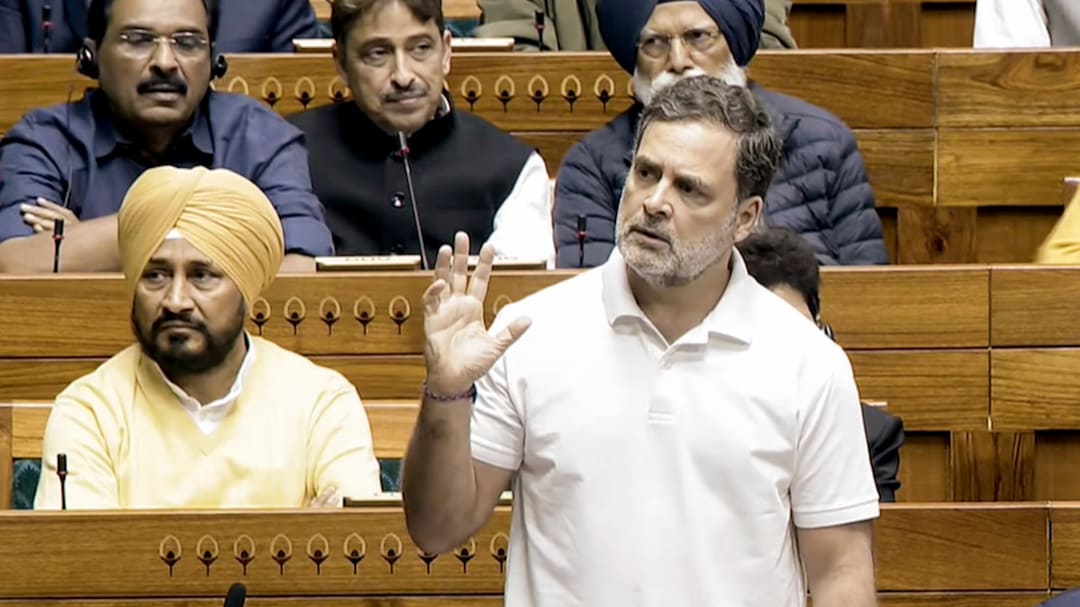
    After the session, Shashi Tharoor described the interaction as highly productive. Speaking to reporters, he noted that 28 out of the 30 committee members were present, calling it one of the most effective meetings he had chaired.

    He said officials responded comprehensively and confidently to every question raised by members. The discussion, he indicated, demonstrated how parliamentary committees can meaningfully engage with complex foreign policy and trade matters.

    Foreign Secretary Vikram Misri was among those who addressed the MPs.

    Trade Deals Dominate the Agenda

    Much of the deliberation centred on the proposed interim India-US trade agreement and the India-European Union Free Trade Agreement (FTA).

    Tharoor indicated that members received detailed briefings on the progress of negotiations, including discussions around agricultural products and Russian oil. While the finer details of the interim agreement with the United States are yet to be disclosed, officials suggested that it could be finalised by the middle of next month. However, Tharoor reminded reporters that confidentiality rules limit what can be publicly shared at this stage.

    He also acknowledged that trade has increasingly become a strategic tool in global commerce, referring to the US decision to impose an 18 per cent reciprocal tariff on Indian products under the new framework.

    Tariff Numbers and Strategic Gains

    Before the interim arrangement, Indian goods faced a 25 per cent tariff in the US, with an additional 25 per cent duty linked to India’s purchase of Russian oil, taking the total to 50 per cent. Under the current understanding, that combined rate has been reduced to 18 per cent.

    Tharoor highlighted that India is among the countries receiving one of the lowest tariff rates. He pointed out that European Union products will face a 15 per cent tariff, while goods from the United Kingdom will face a 10 per cent tariff in exchange for zero tariffs on US goods.

    While India is expected to allow tariff-free access for certain American products, the reciprocal 18 per cent tariff will apply to Indian exports to the US under the proposed structure.

    The $500 Billion Question

    The committee also examined the ambitious plan to scale up imports from the US to $500 billion over five years.

    Tharoor clarified that while the figure was discussed in depth, it should not be viewed as a rigid commitment. Currently, India imports around USD 42 billion worth of goods from the US. Officials suggested that doubling this level would not be difficult, and efforts would be made to progressively move towards the broader $500 billion target.

    He emphasised that there would be no punitive consequences if the number is not achieved, describing it more as an aspirational objective than a binding obligation.

    The meeting also touched upon India’s relations with Bangladesh. Tharoor said the government remains engaged with stakeholders in the neighbouring country. He added that once the election results are announced in Bangladesh, the committee plans to invite the foreign secretary for a more focused discussion.

    Click here to Read More
    Previous Article
    Rupee Slips To 90.62 Against Dollar Amid Geopolitical Tensions, Oil Price Rise
    Next Article
    Surya Gochar 2026: শুধু কালকের দিনটা বাকি, সূর্যের কৃপায় ৫ রাশিতে জ্যাকপট শুক্রেই; প্রায় এক মাস উন্নতির শিখরে থাকবে ভাগ্য

    Related Business Updates:

    Are you sure? You want to delete this comment..! Remove Cancel

    Comments (0)

      Leave a comment