Welcome to DailyAdda News (“we”, “our”, “us”). By downloading, accessing, or using the DailyAdda News mobile app or website, you agree to the following Terms & Conditions. Please read them carefully.
🔹 1. Use of the App
DailyAdda News provides:
Bengali, Hindi & English news
RSS-based headlines
Short summaries
External links to publishers
Local updates, alerts & information
You agree:
To use the app legally
Not to misuse or interfere with its services
Not to copy, distribute or republish our summary content without permission
🔹 2. Content Sources & Copyright
DailyAdda News shows:
Headlines
Short rewritten summaries
Source credit
Link to original article
We do not claim ownership of original articles from external publishers.
You must access full articles on the publisher’s website. External content belongs to respective copyright holders.
🔹 3. User Conduct
You agree not to:
Harm or disrupt the app
Attempt unauthorized access
Upload harmful material
Scrape data or automate requests
Use the app for political manipulation or spreading misinformation
🔹 4. Third-Party Services
DailyAdda News uses:
External RSS feeds
Third-party news websites
Google AdMob
Analytics services
We are not responsible for:
Accuracy of external content
Availability of third-party websites
Their privacy policies or terms
🔹 5. Notifications
DailyAdda News may send:
Breaking news alerts
Job alerts
Local city updates
Weather warnings
You may disable notifications anytime in device settings.
🔹 6. No Guarantee of Accuracy
News is subject to change. We try to provide accurate updates but:
We do not guarantee 100% accuracy
We are not responsible for errors or delays
Users should verify important news directly from official sources
🔹 7. Advertisements
DailyAdda displays ads through:
Google AdMob
Other ad partners
We are not responsible for:
Content of ads
Actions taken on third-party ad pages
🔹 8. Limitation of Liability
DailyAdda News is not liable for:
Data loss
App downtime
Incorrect or outdated news
Third-party website actions
Financial, personal, or business loss caused by news content
Use the app at your own risk.
🔹 9. Changes to the Service
We may modify:
Features
Categories
App layout
Terms & Conditions
We can also suspend or discontinue parts of the service.
We use cookies to ensure you get the best experience on our website. By continuing to use our site, you accept our use of cookies,
Privacy Policy,
and
Terms of Service.
Your dog may look at you with those irresistible puppy eyes while you eat, but some of the foods you enjoy could quietly turn into a medical emergency for your fur baby. Many pet parents unknowingly share table scraps believing they are showing love, while in reality they may be putting their dog’s health at risk. From festive treats to midnight snacks, several common household foods are highly toxic for dogs and can cause serious illness, organ failure, or even death.
ABP Live Pet First brings you this must-read guide to the 8 most dangerous human foods for dogs, explaining why they are harmful, what symptoms to watch for, and how to protect your pet, in a way that’s informative, fun to read, and life-saving.
Chocolate contains theobromine and caffeine, two stimulants that dogs cannot process efficiently. Even small amounts can cause vomiting, diarrhoea, rapid breathing, increased heart rate, seizures and, in severe cases, death. Dark chocolate and baking chocolate are especially dangerous because they contain much higher concentrations of these toxic compounds. Many pet parents underestimate the danger, thinking one bite won’t hurt. Unfortunately, for smaller breeds, even a tiny piece can trigger life-threatening symptoms. Keep chocolate securely stored, avoid dropping wrappers on the floor, and educate children not to share sweets with pets.
2. Grapes And Raisins
(Image Source: ABPLIVE AI)
Grapes and raisins may appear harmless but they are among the most mysterious and deadly toxins for dogs. Even a few pieces can cause sudden kidney failure. The exact toxic substance remains unknown, which makes this danger especially unpredictable, some dogs react severely after eating just one grape. Early symptoms include vomiting, lethargy, loss of appetite, dehydration and abdominal pain. Without urgent veterinary care, the damage can become permanent. Never offer your dog fruit salads, cakes, or desserts containing raisins. Always check ingredient labels on packaged foods and keep grapes far away from curious snouts.
3. Onions And Garlic
(Image Source: ABPLIVE AI)
Onions, garlic, leeks, and chives belong to the allium family and can destroy a dog’s red blood cells, leading to anaemia. This damage can occur whether the food is raw, cooked, powdered or dried. Even small amounts consumed regularly can build up toxins in your dog’s system. Symptoms may appear days later and include weakness, pale gums, vomiting, breathlessness, and rapid heartbeat. Many gravies, curries and sauces contain onion or garlic powder, making Indian kitchens particularly risky. Never share leftovers and always check food before offering your pet any “taste.”
4. Xylitol
(Image Source: ABPLIVE AI)
Xylitol, a common artificial sweetener found in sugar-free gum, peanut butter, baked goods and toothpaste, is extremely toxic to dogs. It causes a dangerous drop in blood sugar within minutes and can lead to liver failure. Even one stick of gum can be fatal for a small dog. Symptoms include vomiting, loss of coordination, seizures and collapse. Always store sugar-free products safely and read ingredient labels before giving your dog any packaged treat.
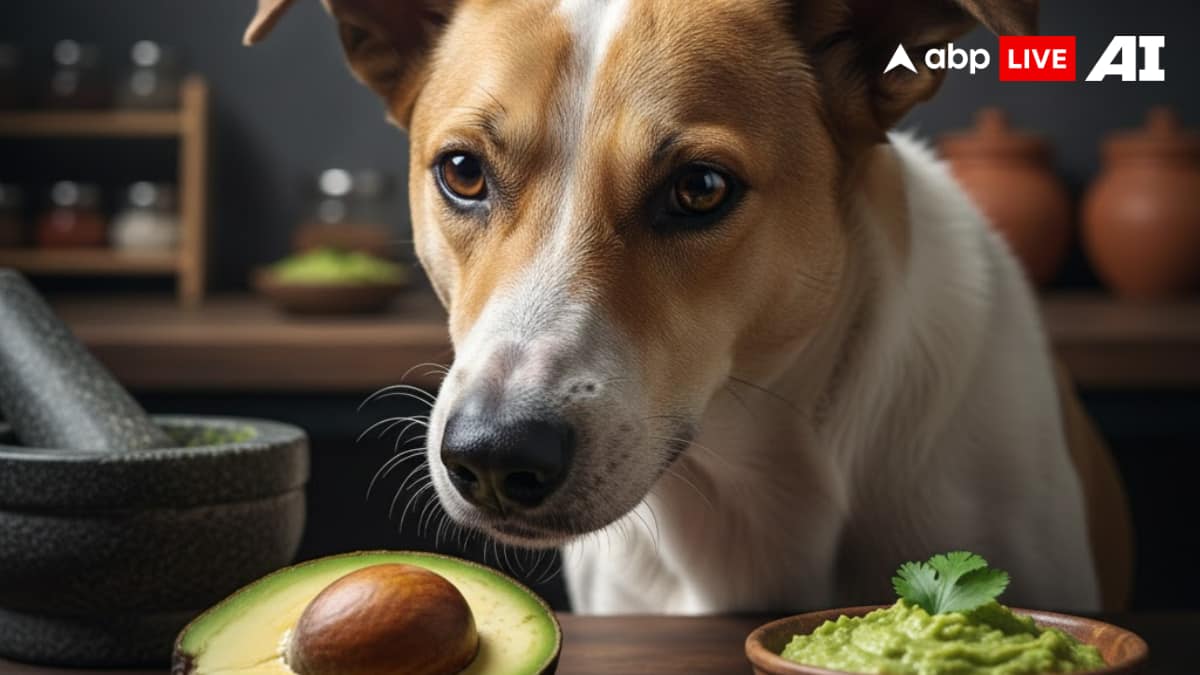
5. Avocado
(Image Source: ABPLIVE AI)
Avocados may be a trendy superfood for humans, but for dogs, they can pose real health risks. The fruit contains a natural substance called persin, a toxin that can irritate a dog’s digestive system and trigger uncomfortable symptoms such as vomiting, diarrhoea, stomach pain, and loss of appetite. The dangers don’t stop there. The large avocado pit is a major choking hazard and can easily become lodged in a dog’s throat or digestive tract, potentially leading to life-threatening intestinal blockages that require emergency surgery. Even the thick skin can cause irritation and digestive upset if swallowed. Avocado-based foods such as guacamole, avocado toast, dips, salads, and smoothies often contain additional toxic ingredients for dogs like onion, garlic, salt, or lemon juice, compounding the danger.
6. Alcohol
(Image Source: ABPLIVE AI)
Alcohol is one of the most dangerous substances a dog can ingest, and there is truly no safe amount for canine consumption. Unlike humans, dogs lack the metabolic capacity to process alcohol efficiently, meaning it is absorbed into their bloodstream extremely fast and begins affecting vital organs almost immediately. Even a few sips of beer, wine, or spirits can lead to serious poisoning. Early warning signs often include vomiting, excessive drooling, disorientation, loss of balance, weakness, and difficulty breathing. As alcohol continues to affect the nervous system, more severe symptoms may develop, such as dangerously low blood sugar, abnormal heart rhythms, seizures, body temperature drops, coma, and sudden collapse. In the worst cases, alcohol toxicity can be fatal.
7. Macadamia Nuts
(Image Source: ABPLIVE AI)
Macadamia nuts may look harmless and even healthy to humans, but for dogs they are extremely dangerous. Even a small amount of these nuts can trigger severe reactions in a dog’s body within just a few hours of consumption. Common symptoms include sudden weakness, especially in the hind legs, vomiting, tremors, fever, joint and muscle pain, and extreme lethargy. Many dogs appear unable to stand or walk properly, which can be deeply distressing for pet parents. In some cases, symptoms escalate into depression, stiffness, and overheating, requiring immediate veterinary care. These effects can last anywhere from 12 to 48 hours, depending on the dog’s size, age, and the quantity consumed.
8. Caffeine
(Image Source: ABPLIVE AI)
Your morning coffee may be your daily lifeline, but for dogs, caffeine is a powerful toxin that can turn a simple sip into a serious medical emergency. Caffeine is found not only in coffee and tea, but also in energy drinks, soft drinks, chocolate, pre-workout powders, caffeine tablets, weight-loss supplements, pain relievers, and even certain cold medications. Dogs metabolise caffeine far more slowly than humans. Once ingested, caffeine rapidly overstimulates a dog’s central nervous system and heart. Symptoms usually begin within 30 to 60 minutes and can escalate quickly. Early warning signs include restlessness, hyperactivity, excessive panting, vomiting, rapid breathing and increased heart rate. As toxicity progresses, dogs may experience muscle tremors, seizures, abnormal heart rhythms, high fever, collapse, and in extreme cases, coma or death.