Welcome to DailyAdda News (“we”, “our”, “us”). By downloading, accessing, or using the DailyAdda News mobile app or website, you agree to the following Terms & Conditions. Please read them carefully.
🔹 1. Use of the App
DailyAdda News provides:
Bengali, Hindi & English news
RSS-based headlines
Short summaries
External links to publishers
Local updates, alerts & information
You agree:
To use the app legally
Not to misuse or interfere with its services
Not to copy, distribute or republish our summary content without permission
🔹 2. Content Sources & Copyright
DailyAdda News shows:
Headlines
Short rewritten summaries
Source credit
Link to original article
We do not claim ownership of original articles from external publishers.
You must access full articles on the publisher’s website. External content belongs to respective copyright holders.
🔹 3. User Conduct
You agree not to:
Harm or disrupt the app
Attempt unauthorized access
Upload harmful material
Scrape data or automate requests
Use the app for political manipulation or spreading misinformation
🔹 4. Third-Party Services
DailyAdda News uses:
External RSS feeds
Third-party news websites
Google AdMob
Analytics services
We are not responsible for:
Accuracy of external content
Availability of third-party websites
Their privacy policies or terms
🔹 5. Notifications
DailyAdda News may send:
Breaking news alerts
Job alerts
Local city updates
Weather warnings
You may disable notifications anytime in device settings.
🔹 6. No Guarantee of Accuracy
News is subject to change. We try to provide accurate updates but:
We do not guarantee 100% accuracy
We are not responsible for errors or delays
Users should verify important news directly from official sources
🔹 7. Advertisements
DailyAdda displays ads through:
Google AdMob
Other ad partners
We are not responsible for:
Content of ads
Actions taken on third-party ad pages
🔹 8. Limitation of Liability
DailyAdda News is not liable for:
Data loss
App downtime
Incorrect or outdated news
Third-party website actions
Financial, personal, or business loss caused by news content
Use the app at your own risk.
🔹 9. Changes to the Service
We may modify:
Features
Categories
App layout
Terms & Conditions
We can also suspend or discontinue parts of the service.
We use cookies to ensure you get the best experience on our website. By continuing to use our site, you accept our use of cookies,
Privacy Policy,
and
Terms of Service.
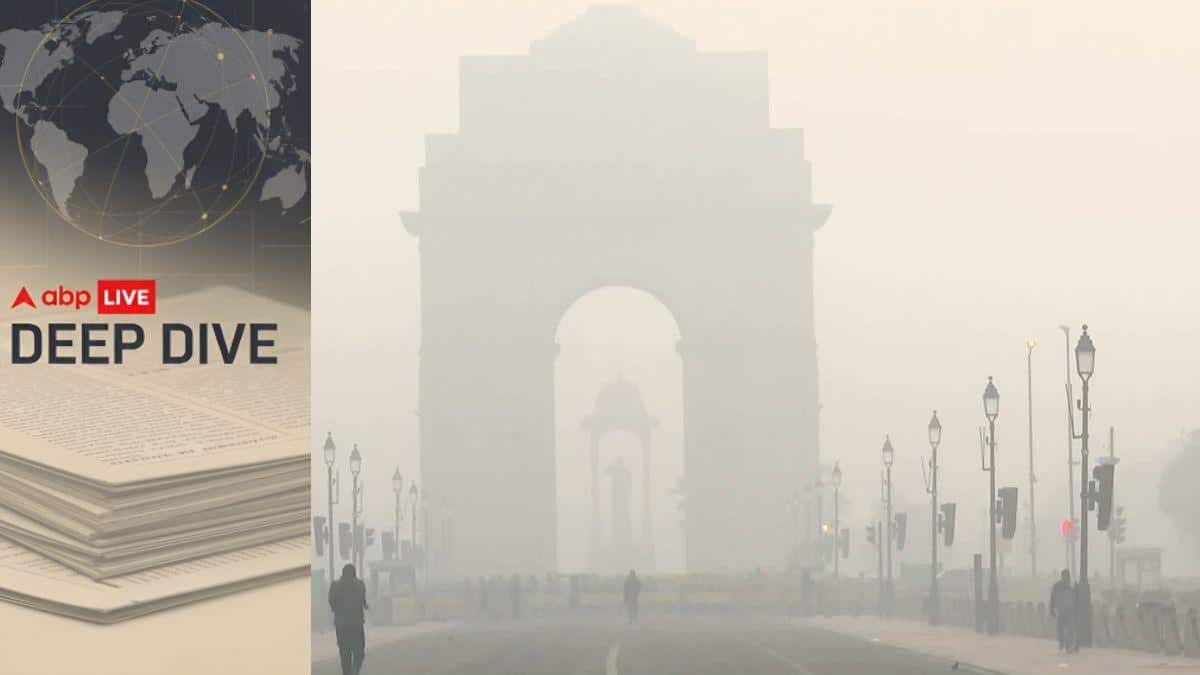
ABP Live Deep Dive: Delhi’s toxic air is no longer a winter headline that fades with the seasons. In 2025, the national capital recorded zero ‘good’ air quality days, underscoring a deepening structural crisis that is increasingly weighing on the economy, public health and, crucially, tourism. What was once dismissed as a temporary inconvenience has now become a year-round risk factor that is reshaping how people live, work and travel to the city.
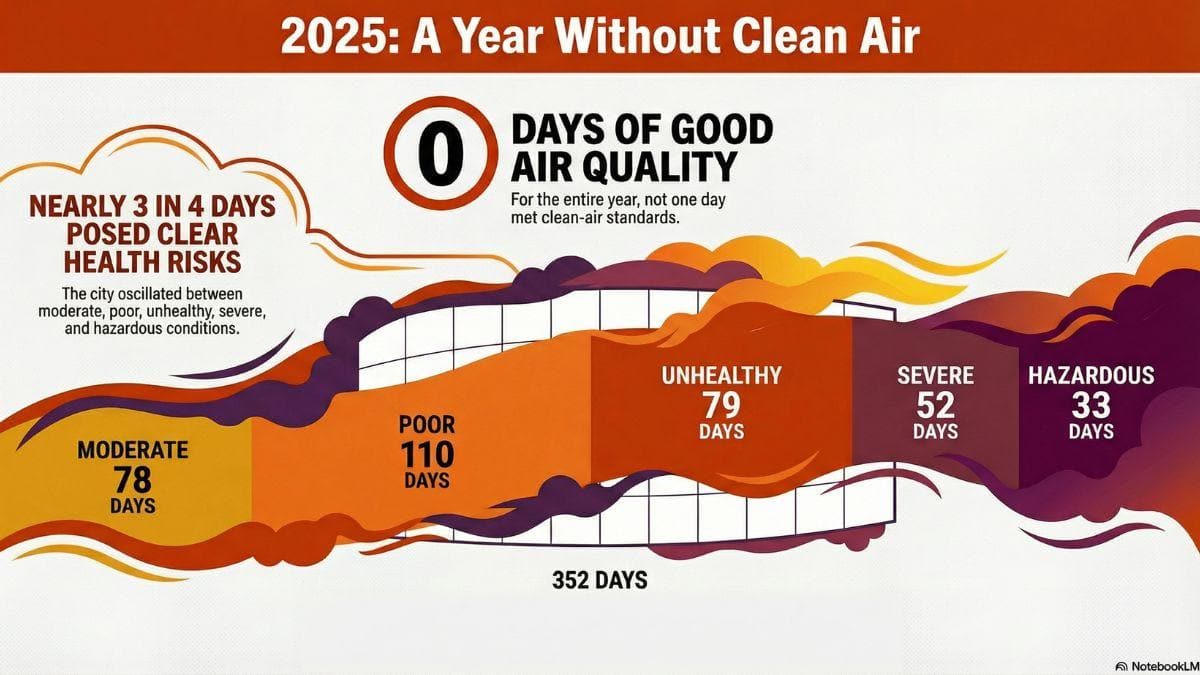
According to data from AQI.in based on US EPA standards, Delhi spent the entire year oscillating between moderate, poor, unhealthy, severe and hazardous air quality categories. By late December, of the 353 days recorded, 110 were ‘poor’, 79 ‘unhealthy’, 52 ‘severe’, and 33 ‘hazardous’, with not a single day meeting clean-air benchmarks.
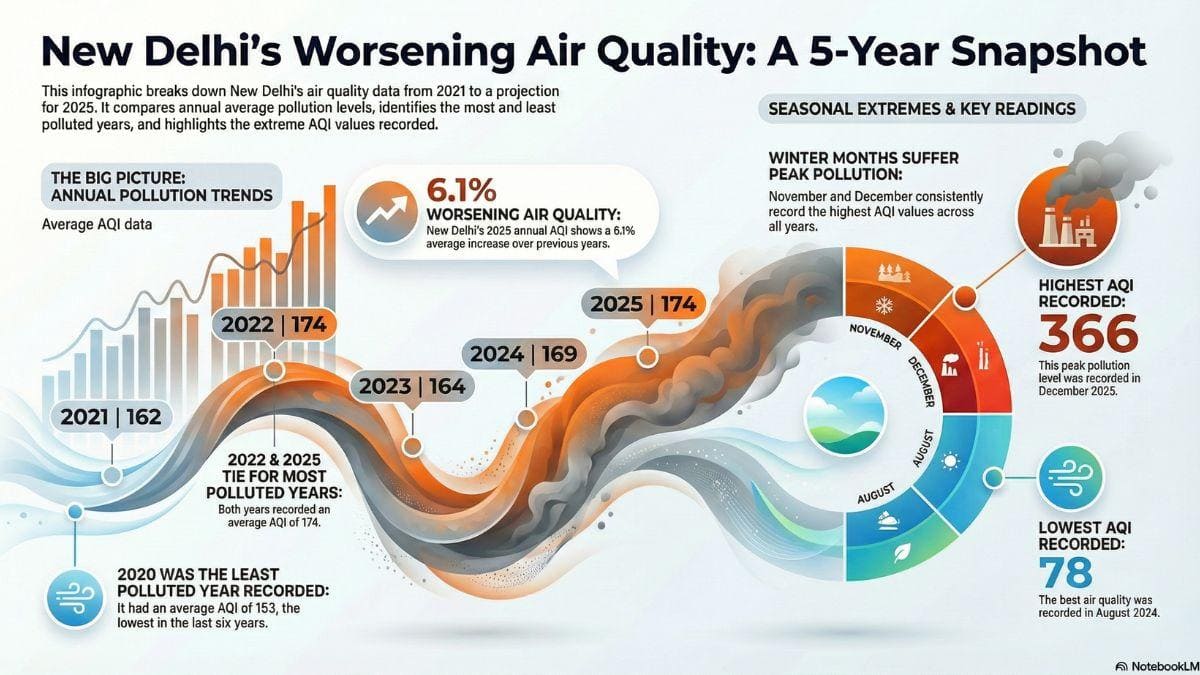
Based on data from AQI.in
A Year Without Breathing Space
The absence of even one clean-air day carries consequences far beyond discomfort. Health experts warn that sustained exposure to high particulate matter increases the risk of respiratory illness, heart disease and stroke, while also worsening outcomes for children and the elderly. Delhi’s health-risk indicator for 2025 remained firmly in the “extreme” category.
Long-term exposure has already taken a measurable toll. Studies estimate that air pollution has cut life expectancy in Delhi by about 8.2 years, while hospitals report a 25 per cent rise in respiratory and cardiac OPD visits during severe smog episodes. Doctors are also flagging neurological risks. Dr Daljit Singh, vice chairman and head of neurosurgery at Max Smart Super Speciality Hospital, said nearly 17 per cent of global stroke cases are now linked to air pollution, with Delhi seeing spikes during high-pollution months, reported Times of India.
Based on data from AQI.in
Travel Advisories Put Delhi in the Spotlight
The pollution crisis is now spilling into India’s external image. In recent weeks, Singapore, the UK and Canada issued advisories cautioning their nationals about travel to North India due to hazardous air quality, threatening to disrupt what is traditionally a peak quarter for inbound tourism, reported The Economic Times.
The Singapore High Commission urged citizens to follow GRAP Stage-IV guidelines, including staying indoors and wearing masks when outdoors. Meanwhile, the UK’s Foreign, Commonwealth & Development Office warned that pregnant women and those with heart or respiratory conditions may wish to consult doctors before travelling to North India, calling severe pollution a major “health hazard”.
Tourism Takes a Direct Hit
Travel agents say the impact is already visible. International tourists are shortening stays, altering itineraries or skipping Delhi NCR altogether. Ravi Gosain, President of the Indian Association of Tour Operators (IATO), said deteriorating air quality during peak travel months is eroding travel confidence.
“As the entry point for visitors to India, Delhi significantly shapes the experience of first-time travellers. Repeated pollution crises are shortening stays and influencing destination choices,” Gosain said, adding that sustained policy action is essential to protect tourism livelihoods.
The ripple effects extend beyond leisure travel. Venkatesh Naidu, CEO of Bajaj Capital Insurance Broking, described pollution as a “material friction point” for tourism.
“When AQI slips into the severe zone, flight delays, cancellations and poor visibility disrupt the entire tourism value chain, from hotels to airport transfers. Even leisure circuits to Agra and Jaipur feel the impact when travellers reroute or postpone trips,” Naidu said.
Medical and Business Travel Under Pressure
While international medical tourism remains resilient due to India’s strong healthcare reputation, experts say air quality is increasingly part of the conversation, especially for respiratory and cardiac patients.
Sonam Garg Sharma, Founder and CEO of Medical Linkers, noted that while air quality rarely decides urgent treatment journeys, awareness is rising among domestic patients and pulmonary-care cases.
Dr Abhay Sinha, Director General at the Services Export Promotion Council, said India is responding with measures like GRAP, pointing to the gradual rebuilding of confidence in the healthcare ecosystem.
The Economic Cost Is Mounting
The financial impact is stark. Air pollution costs India $36.8 billion annually, rising to $95 billion, or about 3 per cent of GDP, when productivity losses and premature deaths are included. For Delhi alone, a CREA analysis estimates losses of Rs 64,250 crore in a single year, or 5.8 per cent of the city’s GDP.
A survey of 17,000 residents, cited by The TOI, found that four in 10 Delhiites would prefer to leave the city to escape polluted air. The report, released by the Illness to Wellness Foundation with support from the CII–ITC Centre of Excellence for Sustainable Development, warned that pollution is disrupting education, retail, hospitality and investor confidence.
A Structural Problem Demands Structural Solutions
Source apportionment data show that vehicles account for 32 per cent of particulate emissions, followed by construction and road dust (28 per cent), industry (17 per cent), crop residue burning (9 per cent), thermal power plants (8 per cent) and household sources (6 per cent). These year-round emissions overwhelm short-term emergency responses like GRAP.
Entrepreneur and angel investor Aman Dhall warned that cities normalising toxic air risk losing global relevance.
“Clean air must be treated as core urban infrastructure, on par with roads and power. Without it, Delhi risks pricing itself out of global trust,” he said.
The Road Ahead
Delhi’s 2025 data sends an unmistakable signal: air pollution is no longer a seasonal inconvenience but a structural failure with direct economic consequences. Until emissions are reduced at source, across transport, industry and urban planning, the capital risks losing not just tourists, but talent, investment and long-term competitiveness.
For a city that serves as India’s global gateway, the cost of inaction is becoming impossible to ignore.